


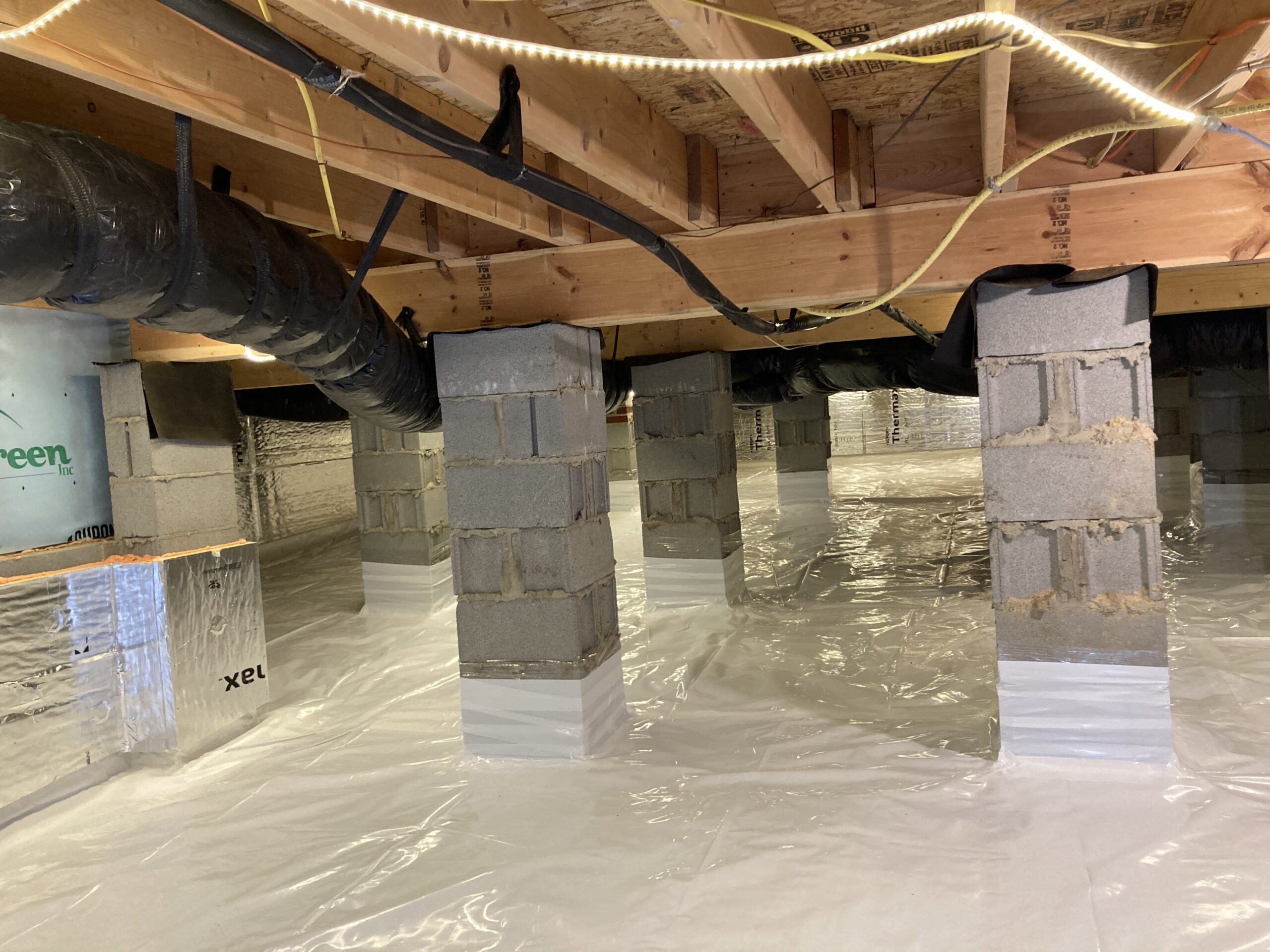
Brier Creek has a lot going for it. Easy access to I-540, top-rated Wake County schools, newer construction, shopping and restaurants minutes from your front door — it’s easy to see why neighborhoods like Brier Creek Country Club, Brier Creek Commons, and Wyndfall have become some of the most sought-after addresses in northwest Raleigh.
But there’s something about Brier Creek that most homeowners don’t think about until something goes wrong: the land it was built on. Much of the Brier Creek corridor sits in a low-lying area near the Brier Creek reservoir and its surrounding tributaries — and that geography, combined with North Carolina’s notoriously humid summers, creates a moisture environment beneath these homes that many owners don’t discover until they’re dealing with musty odors, high energy bills, or worse.
Here’s what’s happening under your floor, and what you can do about it.
“Many Brier Creek homes were built in the 2000s and feel ‘new’ — but a 20-year-old unencapsulated crawl space has had two decades to accumulate moisture damage that isn’t visible from the living area above.”
The Brier Creek Moisture Problem Starts With the Land
The Brier Creek area gets its name from Brier Creek itself — a waterway that drains into Falls Lake and runs through much of the northwest Raleigh watershed. Development in this corridor boomed from the late 1990s through the 2010s, with subdivisions carved out of former farmland and wooded land that had previously absorbed and channeled significant groundwater.
When that land was developed, the natural drainage patterns were altered. Impervious surfaces — roads, driveways, rooftops — now push stormwater runoff into areas that weren’t engineered to handle it. Combined with Wake County’s heavy clay-based soil, which holds moisture rather than draining it, the ground beneath many Brier Creek homes stays saturated well into the dry season.
That persistent ground moisture evaporates upward — and if your crawl space has open foundation vents (as the vast majority of homes built before 2012 do), that moisture-laden air flows directly into the space beneath your floors. Day after day, summer after summer, the result is a crawl space that never fully dries out.
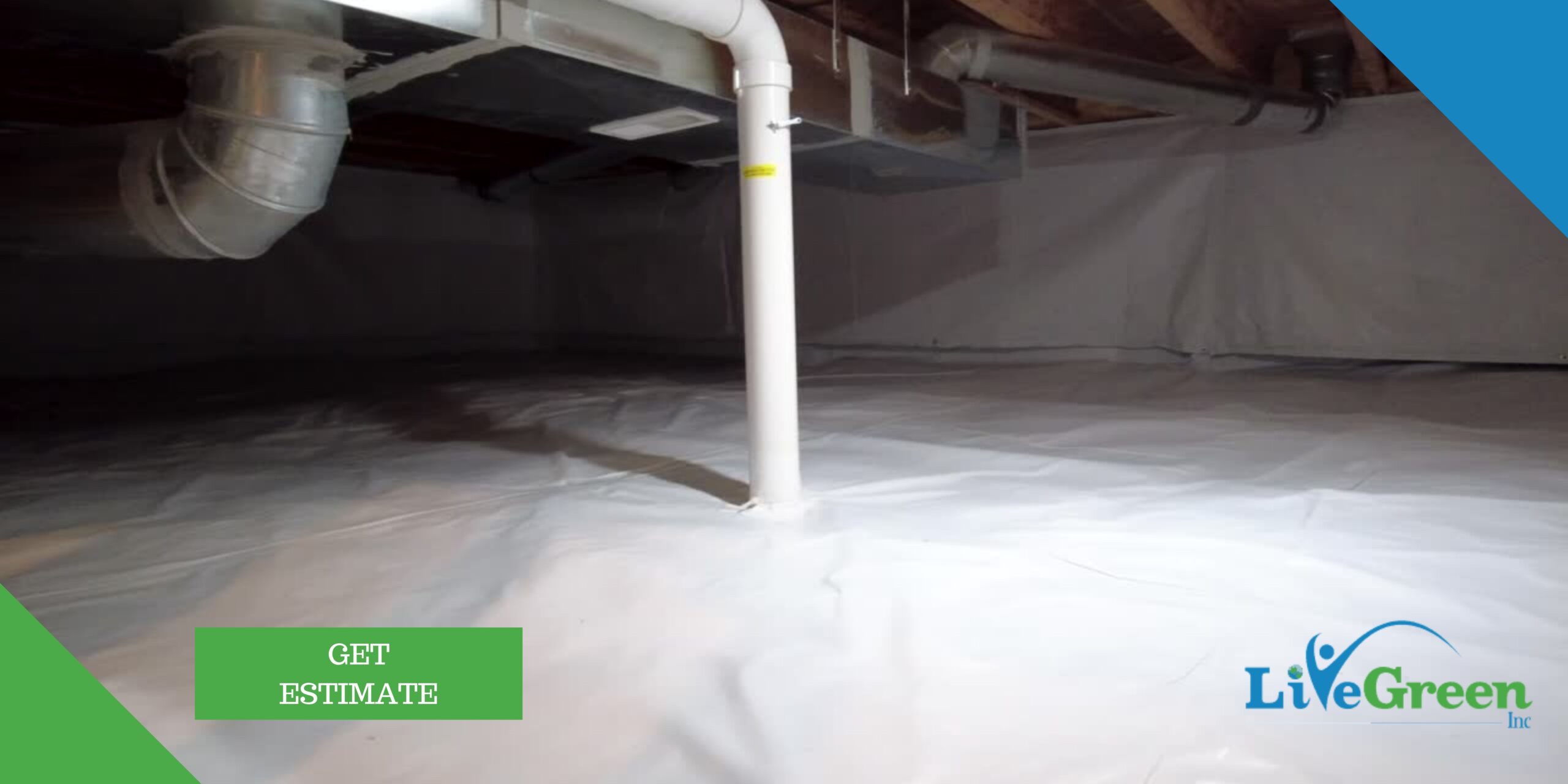
A sealed vapor barrier cuts off ground moisture at the source — essential in low-lying areas like the Brier Creek corridor.
What “New Construction” Doesn’t Protect You From
One of the most common misconceptions we hear from Brier Creek homeowners is: “My house is only 15–20 years old — surely I don’t need to worry about this yet.”
The age of the home matters far less than the condition of its crawl space. A home built in 2005 with an open, vented crawl space has had twenty summers of moisture exposure. That’s twenty humid North Carolina summers where warm, wet air condensed onto floor joists, subfloor sheathing, and insulation — materials that were perfectly fine when installed and are now showing the early-to-mid stages of moisture damage.
By the time homeowners in communities like Traditions at Brier Creek, The Hamptons, or Brier Creek Village notice a problem — a musty smell, a cold floor, an HVAC system that runs constantly — the damage has typically been accumulating for years. The crawl space is one of the least-visited parts of a home, which is exactly why its problems go undetected for so long.
Warning Signs Brier Creek Homeowners Shouldn’t Ignore
- Musty or earthy smell anywhere in the home — Especially on the first floor or near HVAC vents. This is almost always crawl space air migrating upward through the stack effect.
- HVAC running longer than it should — A damp crawl space dramatically increases the moisture load your system has to manage. If your energy bills have crept up, your crawl space may be the reason.
- Allergy symptoms that worsen at home — Mold spores from a damp crawl space travel into the living area through subfloor gaps and HVAC return air. If your allergies are worse indoors than outside, this is worth investigating.
- Uneven or slightly soft spots in flooring — Early-stage wood rot in floor joists or subfloor sheathing can cause subtle floor flex that homeowners often dismiss as normal settling.
- Condensation on first-floor windows in summer — Excess interior humidity, often sourced from the crawl space, causes window condensation. It’s a sign the moisture load in your home is too high.
- Visible insulation sagging or falling — Batt insulation between floor joists absorbs moisture and eventually falls. If you’ve looked in your crawl space and seen drooping insulation, moisture damage is already underway.
How Crawl Space Encapsulation Solves the Problem
Crawl space encapsulation transforms your crawl space from an open, vented environment into a sealed, conditioned one. Instead of humid outside air cycling through the underside of your home all summer, the crawl space is isolated from both the outdoor air and the ground moisture below — creating a stable, dry environment year-round.
A complete encapsulation system installed by LiveGreen Inc typically includes the following components, tailored to your home’s specific needs:
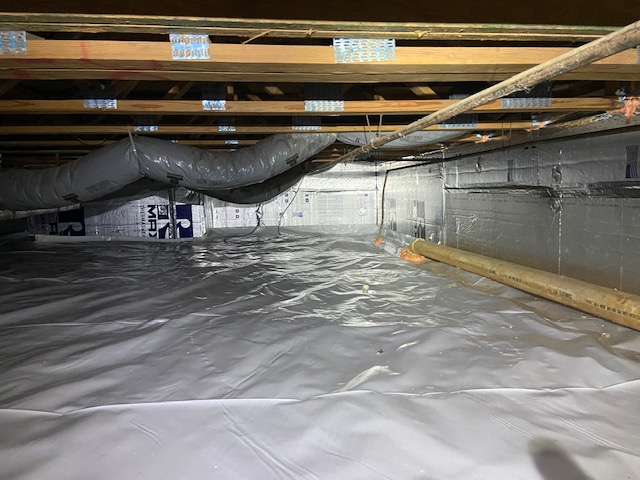
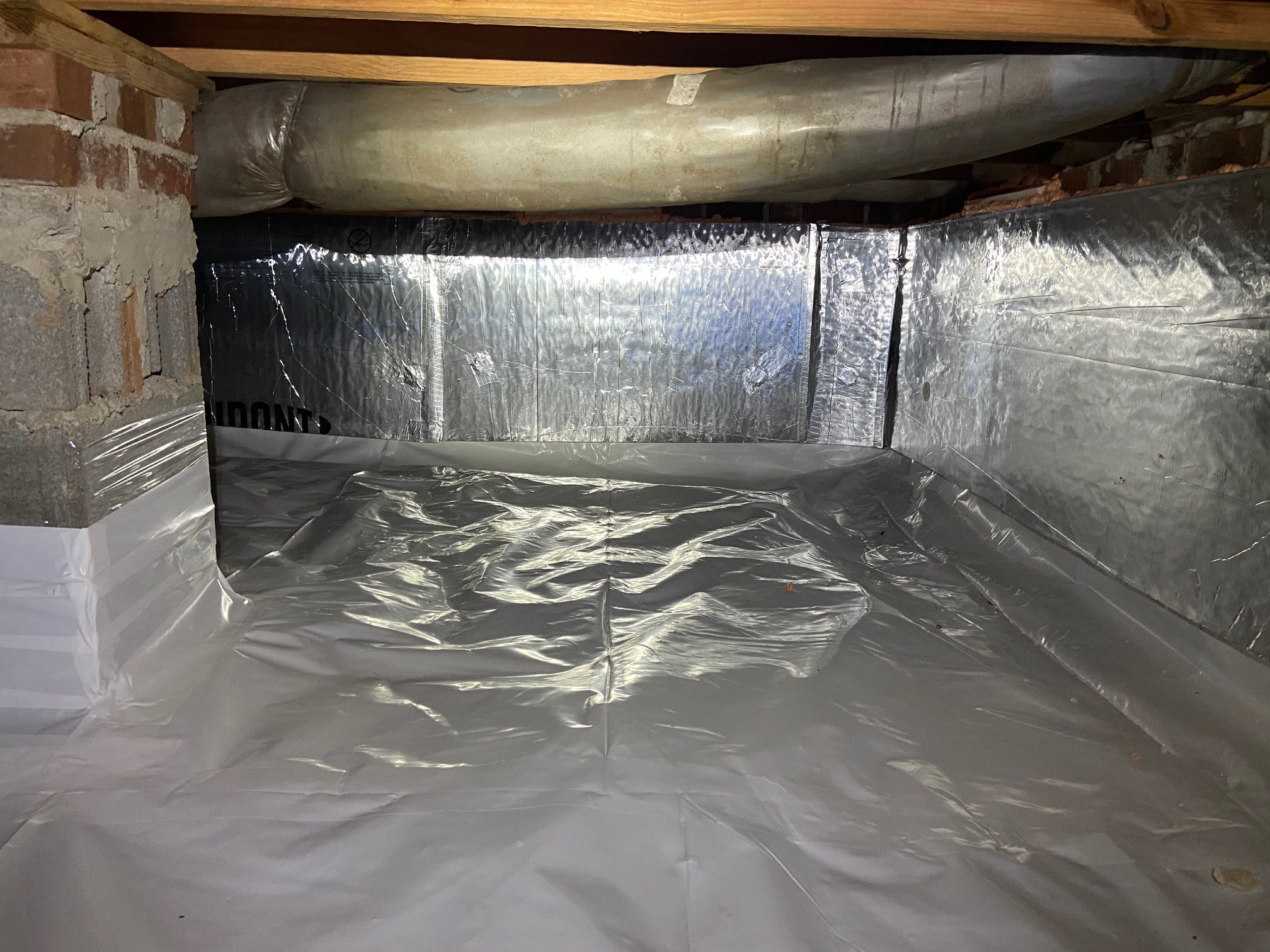
Components of a LiveGreen Encapsulation System
- Heavy-duty reinforced vapor barrier — A thick poly liner covers the entire crawl space floor and is sealed up the foundation walls, cutting off ground moisture at the source.
- Foundation vent sealing — Existing perimeter vents are permanently sealed, stopping the flow of humid outdoor air into the crawl space. This single step has the largest impact on moisture control.
- Interior drainage system — For homes with active water intrusion — especially relevant in lower-lying sections of Brier Creek near the creek corridor — a perimeter drainage channel and sump pump remove water before it can accumulate.
- Crawl space dehumidifier — A properly sized dehumidifier maintains safe relative humidity levels inside the sealed space, protecting against any residual moisture buildup.
- Spray foam or rigid board insulation — Insulating the foundation walls instead of the floor joists keeps the crawl space in the home’s thermal envelope, improving comfort and efficiency significantly.
The Energy Savings Brier Creek Homeowners Notice Immediately
Of all the benefits homeowners report after encapsulation, energy savings are often the most immediately tangible. When your crawl space is open and damp, your HVAC system fights a two-front battle: it has to cool or heat the air in your living spaces and manage the moisture load continuously seeping up from below. That’s a losing fight in a North Carolina summer, and your utility bills reflect it.
After encapsulation, the moisture load drops dramatically. Your HVAC system runs shorter cycles to maintain the same comfort level. Rooms that always seemed stuffy or hard to keep cool — often first-floor rooms directly above the crawl space — become noticeably more comfortable. Homeowners throughout Brier Creek and northwest Raleigh routinely report 15–25% reductions in monthly energy costs after a full encapsulation project.
For homes in communities like Brier Creek Country Club or The Hamptons — where larger square footage means larger crawl spaces and bigger HVAC systems — those savings add up fast.
“After encapsulation, the musty smell was gone within two weeks. Our downstairs stays cooler and our power bill dropped noticeably that first summer. We wish we’d done it years ago.”
Protecting Your Brier Creek Home’s Value
Northwest Raleigh home values have climbed steadily, and Brier Creek properties command strong prices in the current market. But home inspectors are increasingly thorough — and crawl space condition is one of the first things they flag. An inspector who finds evidence of moisture damage, mold, or sagging insulation in a crawl space can derail a sale or force a significant price concession.
A professionally encapsulated crawl space with documentation from LiveGreen Inc tells a prospective buyer (and their inspector) that the home has been properly maintained from the foundation up. It’s a differentiator in a competitive market and a clear signal that the home has been cared for — exactly the kind of evidence buyers in Brier Creek’s price range expect to see.
Is Your Brier Creek Home’s Crawl Space Protected?
LiveGreen Inc offers free on-site crawl space assessments for homeowners throughout northwest Raleigh. We’ll tell you exactly what we find — and give you a no-pressure quote.
Get Your Free Quote →Prefer to talk to someone directly? Call us today for a free crawl space assessment — no pressure, no obligation.
(919) 453-6411Frequently Asked Questions
Answers to common questions from Brier Creek & northwest Raleigh homeowners
A home that “seems fine” from the inside can have significant moisture damage accumulating in the crawl space below. Most of the early damage — to insulation, floor joist surfaces, and subfloor sheathing — isn’t visible or noticeable from the living area. By the time you smell it or feel it in your floors, the problem is well established. A free inspection from LiveGreen takes about 30 minutes and gives you an honest picture of what’s actually happening beneath your home. Many homeowners are surprised by what we find — and relieved to address it before it becomes a larger repair.
Yes — it’s one of the most significant geographic factors we see in northwest Raleigh. The Brier Creek watershed means the water table in many parts of this corridor is higher than in other parts of Raleigh, especially in lower-lying subdivisions closer to the creek and reservoir. That elevated water table keeps ground moisture levels high beneath homes even in dry weather. Combined with the area’s clay soil — which retains water rather than draining it — the ground beneath many Brier Creek crawl spaces stays wet long after rain events. This is exactly the environment where a sealed crawl space makes the biggest difference.
Active water intrusion — water that physically enters the crawl space — requires drainage solutions before or alongside encapsulation. LiveGreen can install an interior perimeter drainage channel and sump pump system that actively removes water as it enters, then layer the encapsulation system on top for long-term protection. Given Brier Creek’s drainage patterns and the stormwater runoff that comes with the area’s density of development, active water management is something we assess in nearly every project in this corridor. We’ll identify exactly what’s needed during your free assessment.
For most Brier Creek homeowners, yes — and significantly. When your crawl space is open and damp, your HVAC system has to work harder to dehumidify and condition the air in your home because moisture is constantly seeping up from below. Sealing that moisture source reduces the overall humidity load your system carries, which means shorter run cycles and lower utility costs. Most homeowners see 15–25% reductions in cooling and heating costs after a full encapsulation. Homes with larger crawl spaces — common in Brier Creek Country Club and similar communities — tend to see the most substantial savings.
Most standard encapsulation projects are completed in one to two days. Larger homes or those requiring drainage system installation may take an additional day. LiveGreen handles everything from initial assessment through final installation, and our crew works efficiently to minimize disruption to your home. We’ll give you a clear project timeline during the quoting process so you know exactly what to expect.
A properly installed encapsulation system is largely maintenance-free. The vapor barrier liner is durable and designed to last for decades. If a dehumidifier is installed, it should be serviced annually (filter cleaning, drainage check) — similar to any other home appliance. If a sump pump is part of the system, occasional inspection to confirm it’s operating correctly is recommended. LiveGreen can walk you through any maintenance tasks specific to your system at project completion, and we’re always available to answer questions afterward.
Project cost depends on the square footage of your crawl space, its current condition, and which system components are needed. A basic vapor barrier installation starts in the low-to-mid thousands; full systems with drainage, dehumidification, and insulation are priced accordingly. Brier Creek homes — which tend to be larger than the Raleigh average — often have bigger crawl spaces that affect total project size. LiveGreen provides free, detailed on-site quotes with no obligation. We’re transparent about pricing and won’t recommend anything you don’t need.
What Raleigh Homeowners Are Saying
