


Ask anyone who’s lived in Raleigh for a while where they’d most want to own a home, and Cameron Village and Five Points come up almost every time. These are the kinds of neighborhoods people fall in love with — tree-lined streets, walkable blocks, independent restaurants, a genuine sense of community, and homes with the kind of character that simply cannot be replicated in newer construction.
Bungalows built in the 1940s. Cape Cods from the 1950s. The occasional Tudor Revival on a deep lot off Glenwood Avenue. Solid brick ranches along Fairview Road. Homes in Bloomsbury, Latham Park, Hayes Barton, and the streets surrounding Cameron Village represent some of Raleigh’s most beloved residential real estate — and some of its most vulnerable crawl spaces.
The crawl space problem in these neighborhoods is real, it’s widespread, and almost nobody talks about it. Here’s why it matters — and what you can do about it before it costs you.
“The very things that make Cameron Village and Five Points homes so desirable — their age, their original construction, their mature landscaping — are exactly the factors that put their crawl spaces at greatest risk.”
Built for Another Era of Building Science
The homes that define Cameron Village and Five Points were constructed primarily between the 1930s and the 1960s — an era when the standard approach to crawl space construction was to vent it. Foundation walls were built with small openings along the perimeter, and the theory was simple: outdoor air would flow through, carry moisture out, and keep the crawl space dry.
It was a reasonable theory. It was also wrong — at least in humid climates like central North Carolina’s.
Building scientists have understood for decades that in humid southeastern climates, vented crawl spaces don’t dry out — they get wetter. When warm, moisture-saturated summer air flows into a cooler crawl space, it hits surfaces like concrete block, bare soil, and wood floor joists and releases its moisture through condensation. The crawl space becomes a reservoir of humidity that feeds mold growth, attracts pests, rots structural wood, and continuously pumps damp air up into the home above.
A home built in 1948 on a vented crawl space has been doing this for over 75 years. The question isn’t whether there’s been moisture damage — it’s how much.
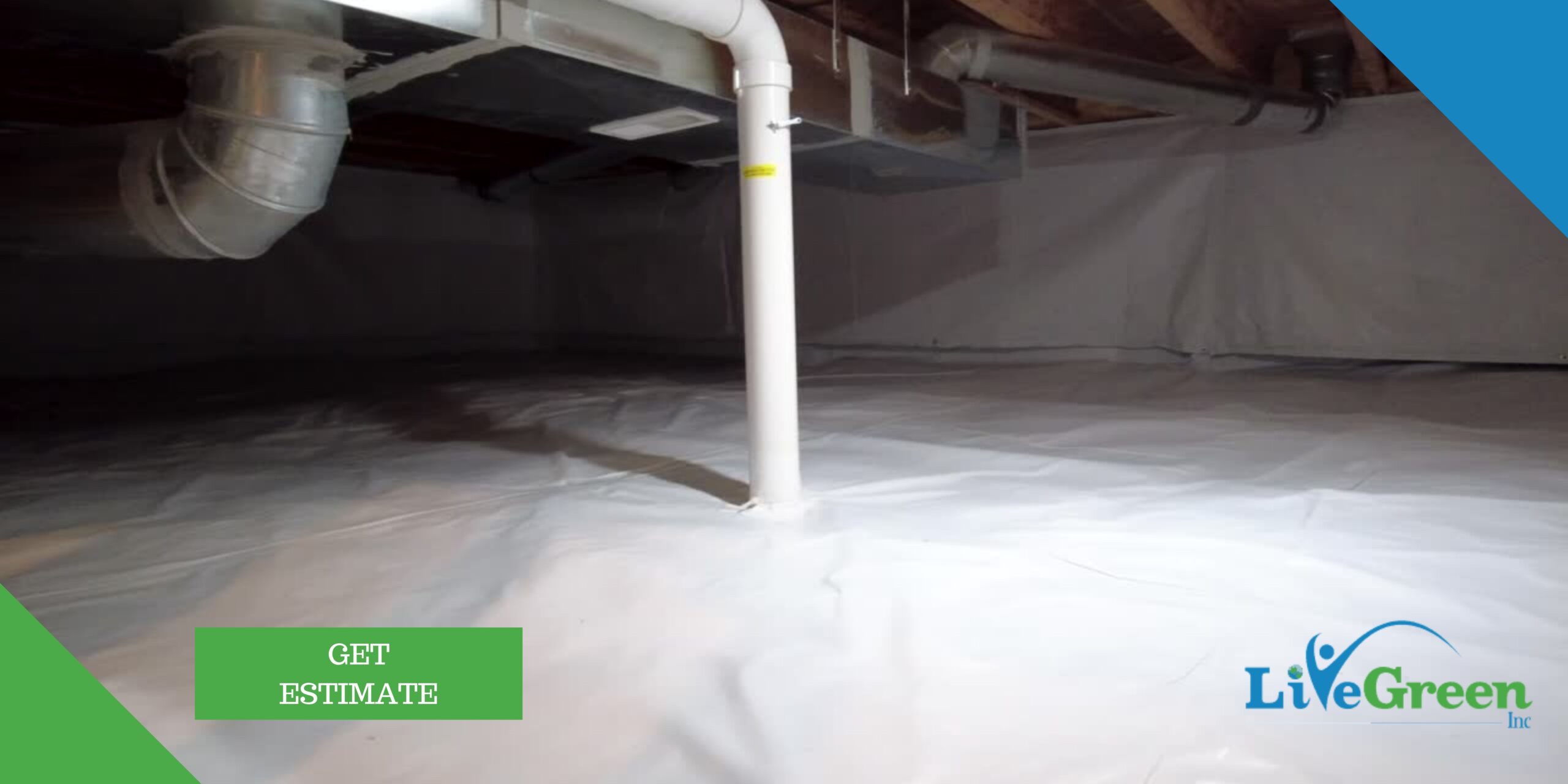
A properly sealed vapor barrier stops decades of ground moisture intrusion at its source.
What Mature Trees and Dense Canopy Do to Your Crawl Space
One of the most striking features of Five Points and the streets around Cameron Village is the tree canopy. Decades-old oaks and maples arch over the sidewalks, providing shade that makes summer afternoons genuinely pleasant — and that contributes, quietly, to crawl space moisture problems.
Mature trees do several things that affect the moisture environment beneath nearby homes. Their root systems pull significant amounts of water from the soil, but they also block sunlight that would otherwise help dry the ground around foundations. In neighborhoods where homes sit close together and shade is nearly constant, the soil stays damp longer after rain events. Leaf litter accumulates against foundation walls and holds moisture against brick and concrete. And the dense canopy traps humid air closer to ground level rather than allowing it to dissipate.
The result is a microclimate at ground level that stays wetter than the surrounding area — and that moisture works its way into crawl spaces through foundation vents, soil vapor transmission, and any gaps in the original concrete block construction.
This isn’t a reason to cut down your trees. It’s a reason to seal your crawl space.
The Renovation Trap: Updating Everything Except What Matters Most
Cameron Village and Five Points are home to a large and active community of renovation-minded homeowners. Kitchens get updated. Bathrooms get gut renovations. Original hardwood floors get refinished. Screened porches get added. These are beautiful neighborhoods full of people who genuinely love their homes and invest in them.
And yet, in our experience working throughout Raleigh’s midtown neighborhoods, the crawl space is almost always the last thing anyone thinks to address — or the first thing that gets cut from the renovation budget when costs run over.
“We see it constantly: a beautifully renovated kitchen sitting directly above a crawl space with moisture-damaged joists and mold on the subfloor sheathing. The renovation made the home more beautiful — but didn’t protect it.”
This matters because moisture damage in a crawl space doesn’t stay in the crawl space. Mold established on subfloor sheathing releases spores into the living area above. Rotting floor joists eventually affect the structural integrity and feel of the hardwood floors that just got refinished. Damp air migrating upward drives interior humidity levels that stress HVAC systems, cause paint to peel prematurely, and make the home feel less comfortable than it should.
Every dollar invested in surface renovations is better protected by a dry, sealed crawl space beneath it.
Signs Your Cameron Village or Five Points Home Has a Crawl Space Problem
- A persistent musty smell anywhere in the home — Especially on the first floor or in closets that back up to exterior walls. This is almost always crawl space air rising through the stack effect.
- Hardwood floors that feel slightly soft or springy in spots — Early-stage wood rot in floor joists causes subtle flex that’s easy to dismiss as “the house settling.” It isn’t.
- Bathroom or kitchen grout cracking repeatedly — Subfloor movement from moisture-damaged structural members causes grout to crack, even in recently renovated spaces.
- Interior doors that stick or drag seasonally — Moisture swells door frames. In older homes where everything is already settled in, new sticking is a sign of changing moisture conditions in the structure.
- Higher-than-expected energy bills — A damp crawl space adds to the humidity load your HVAC manages. Mid-century homes with original single-pane windows often get blamed for energy losses that are actually coming from below.
- Worsening allergy or asthma symptoms indoors — Mold spores and dust mites thrive in damp crawl spaces and travel upward into living areas. If symptoms improve when you leave home, your air quality deserves a closer look.
What a Sealed Crawl Space Actually Looks Like
Many homeowners in older Raleigh neighborhoods have never actually been in their crawl space — and when they do look, what they see is off-putting: bare dirt, a few cobwebs, maybe some old insulation hanging between the joists. It’s not somewhere you want to spend time, and it’s easy to ignore.
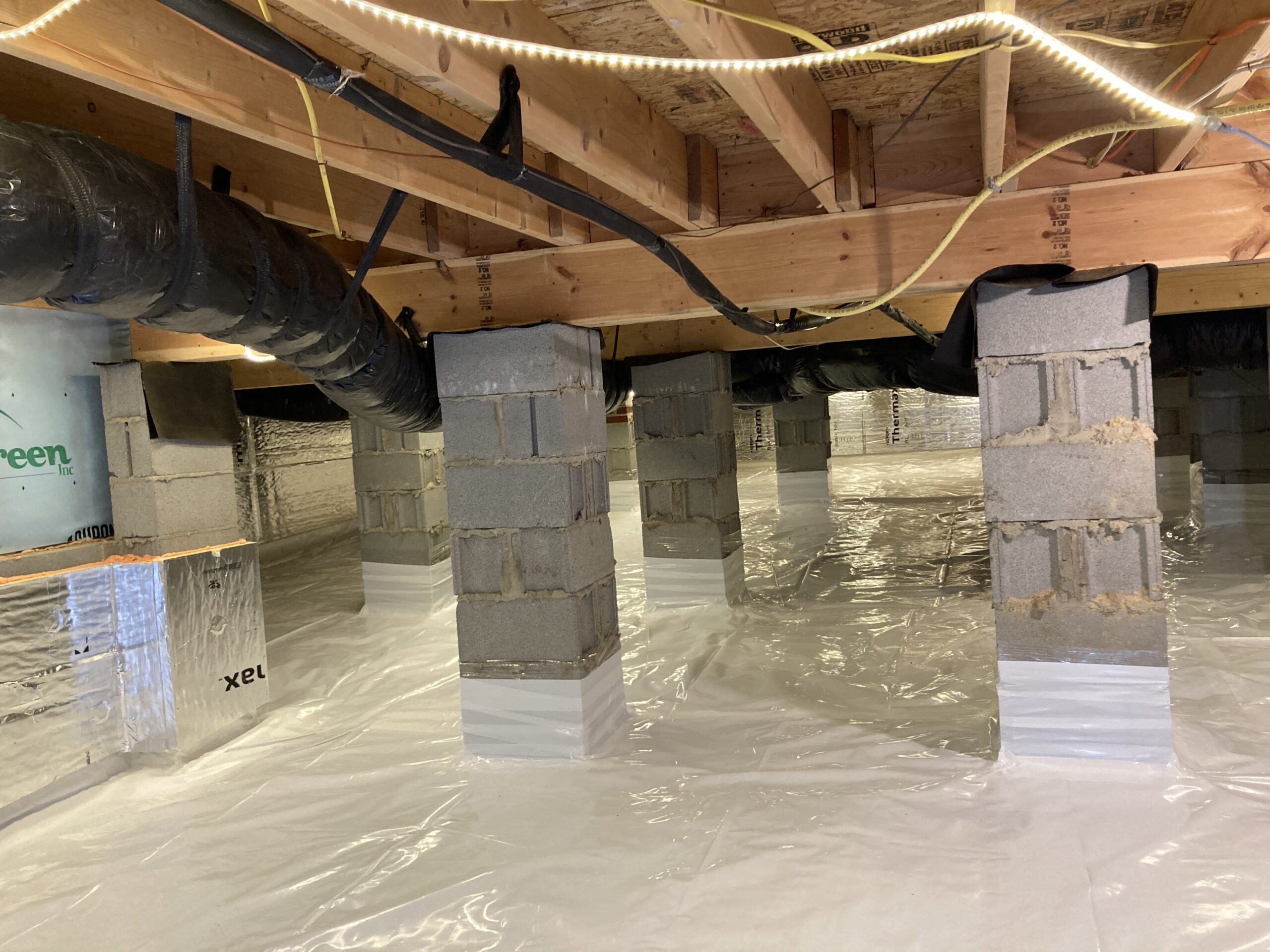
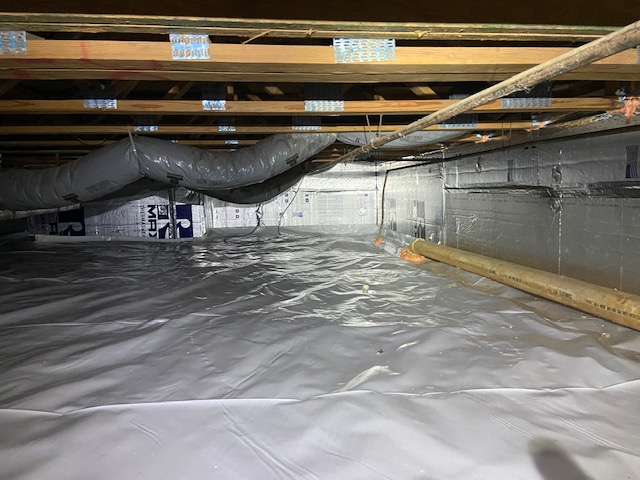
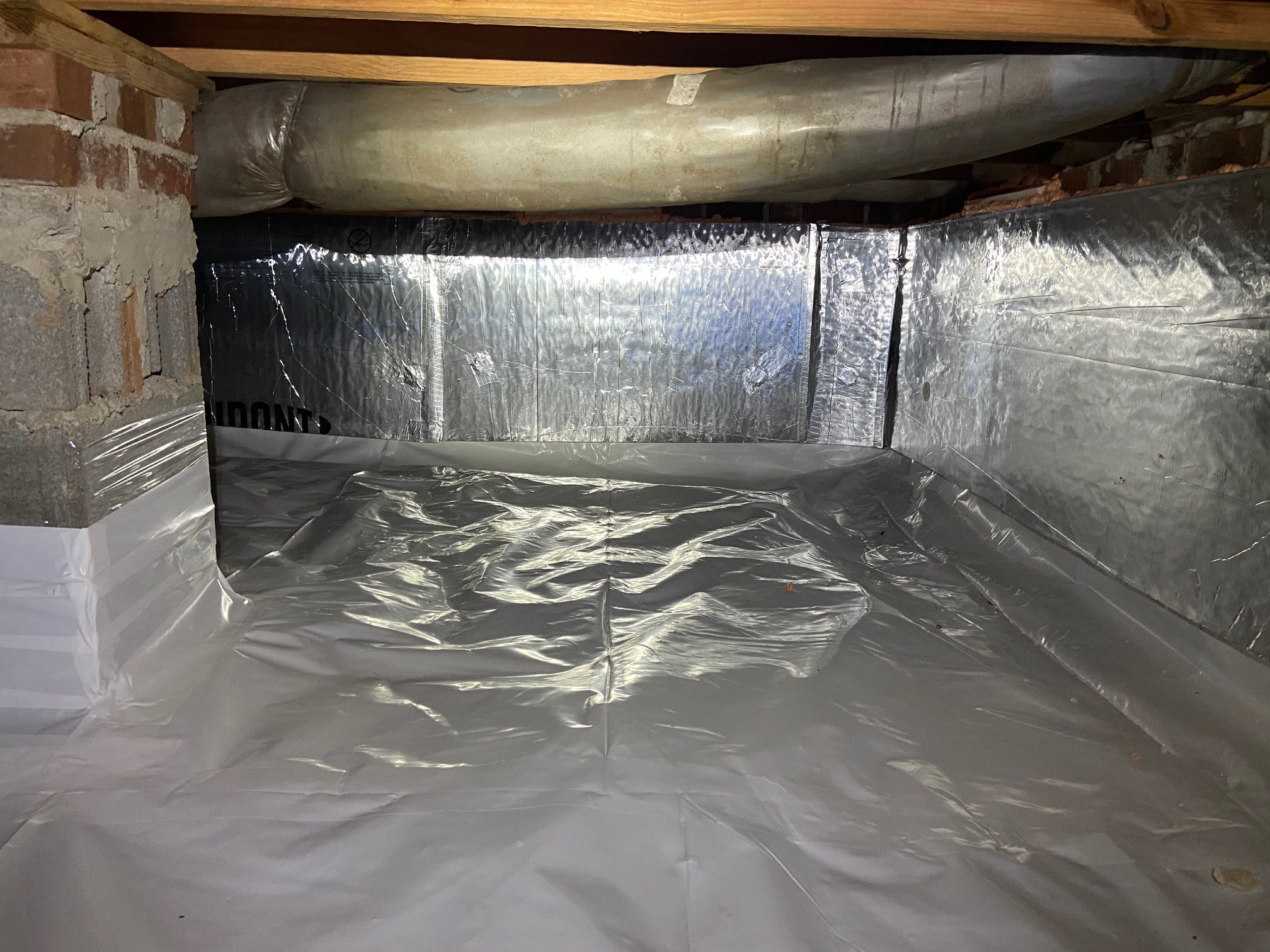
A fully encapsulated crawl space looks completely different. The entire floor and lower walls are covered with a thick, bright white reinforced liner that seals out ground moisture and makes the space clean, accessible, and even usable for storage. The foundation vents are sealed. A dehumidifier quietly maintains safe humidity levels. The floor joists above are visible and dry. It’s a transformation that protects everything above it.
What LiveGreen’s Encapsulation System Includes
- Reinforced vapor barrier liner — A thick, durable poly liner covers the crawl space floor and is sealed up the foundation walls, cutting off ground moisture completely.
- Foundation vent sealing — Original perimeter vents are permanently sealed, ending the cycle of humid outdoor air entering the space each summer.
- Drainage solutions where needed — For homes where water actively enters the crawl space — common in older Raleigh neighborhoods with original drainage infrastructure — perimeter drains and a sump pump manage water before it accumulates.
- Crawl space dehumidifier — A properly sized unit maintains safe humidity levels year-round inside the sealed space, protecting against any residual moisture.
- Foundation wall insulation — Spray foam or rigid board insulation on the foundation walls brings the crawl space into the home’s thermal envelope, warming floors and reducing energy use.
Protecting What Cameron Village and Five Points Homes Are Worth
Homes in these neighborhoods carry strong price tags — and they’ve appreciated significantly over the past decade. A well-maintained home in Hayes Barton, Bloomsbury, or Latham Park commands buyer attention and strong offers. But home inspectors working in Raleigh’s competitive market are increasingly thorough, and crawl space condition is a standard line item on every inspection report.
An inspector who finds moisture damage, mold, or structural deterioration in a crawl space has ammunition to negotiate your sale price down — or to walk away entirely. In a neighborhood where buyers are paying premium prices, they expect premium maintenance. A documented, professionally encapsulated crawl space tells that story clearly.
Beyond resale, there’s a simpler reason to act: the home you love deserves to be protected. The original hardwood floors, the solid brick exterior, the character that simply cannot be recreated — all of it sits on top of a crawl space that has been exposed to decades of moisture. Encapsulation is the most impactful single investment you can make to ensure those features are still there, and still sound, for decades to come.
Is Your Midtown Raleigh Home’s Crawl Space Protected?
LiveGreen Inc offers free on-site crawl space assessments for homeowners throughout Cameron Village, Five Points, and surrounding Raleigh neighborhoods. No pressure — just an honest look at what’s underneath.
Get Your Free Quote →Prefer to talk to someone directly? Call us today for a free crawl space assessment — no pressure, no obligation.
(919) 453-6411Frequently Asked Questions
Answers to common questions from Cameron Village, Five Points & midtown Raleigh homeowners
It depends on the specific home, but a 1950s crawl space in central Raleigh has had 70+ years of moisture exposure — and in nearly every case we inspect, we find at least some evidence of the effects: mold on joists or subfloor sheathing, insulation that has absorbed moisture and lost its effectiveness, occasional wood rot in the more exposed areas, and bare dirt floors releasing vapor into the space continuously. The good news is that most of what we find is addressable. We assess structural conditions honestly and tell you exactly what we see before recommending anything. The free inspection is the right first step regardless of what you expect to find.
Yes — and this is advice we give frequently to homeowners in older Raleigh neighborhoods. Addressing the crawl space before or alongside a major renovation protects everything you’re putting money into above. New flooring, fresh tile, updated cabinetry — all of it is better protected when the subfloor and joists beneath it are dry and stable. If moisture damage in the crawl space is causing subfloor movement, you may also find that some renovation work (like tile grout) cracks or fails prematurely if the underlying structural issues aren’t resolved first. Crawl space encapsulation before a renovation is the smarter sequence.
Absolutely — and we do this regularly in midtown Raleigh’s older housing stock. Original brick and concrete block foundation walls with perimeter vents are standard construction in homes of this era, and sealing those vents is a core part of the encapsulation process. Vent covers are installed and sealed permanently, and the vapor barrier liner is run up the interior face of the foundation walls and sealed at the top. The brick foundation itself is not altered or damaged in the process. This is one of the most common project types we handle in neighborhoods like Five Points and Cameron Village.
This is more common than most people realize. Studies consistently show that a significant portion of the air in your home’s first floor rises from the crawl space below — carrying with it mold spores, dust mite allergens, and damp air. In an older home where the crawl space has been damp for decades, mold colonies on wood surfaces release spores continuously. If your allergy or asthma symptoms are noticeably worse at home than outdoors, or worse on the first floor than upstairs, your crawl space is a very likely contributor. Air quality improvements are one of the most consistently reported benefits homeowners notice after encapsulation.
In our experience, most homeowners simply don’t think about their crawl space until something forces them to. Previous owners may have had no idea there was anything to address — crawl space issues are largely invisible from the living area until they’ve progressed significantly. If you’ve purchased a home in Cameron Village, Five Points, or a similar midtown neighborhood and haven’t had the crawl space inspected since buying it, a free assessment is strongly worth scheduling. We’ll give you an objective picture of what’s down there with no sales pressure attached.
Not at all. Encapsulation work is entirely subsurface — inside the crawl space, below your home’s living areas. Nothing visible from inside or outside the home is altered. In fact, encapsulation actively preserves the original features that give these homes their character: by eliminating the moisture that warps original hardwood floors, buckles trim, and creates the musty atmosphere that sometimes comes with older homes, you’re protecting those irreplaceable details for the long term.
Cost is driven by your crawl space’s square footage, its current condition, and which system components are needed. Homes in Cameron Village and Five Points vary widely in size and crawl space configuration, so there’s no single number that applies across the board. A basic vapor barrier installation starts in the low-to-mid thousands; full systems with drainage, dehumidification, and insulation are priced accordingly based on scope. LiveGreen provides free, detailed on-site quotes — we measure everything, document what we find, and give you a transparent, itemized estimate with no obligation and no pressure.
What Raleigh Homeowners Are Saying
