
There’s a stretch of Raleigh that most locals would agree is the city at its best. Starting east of downtown in Mordecai — one of the oldest intact neighborhoods in the state — and sweeping west through Oakwood, Person Street, Glenwood-Brooklyn, and Boylan Heights, these intown neighborhoods are defined by something you simply cannot manufacture: genuine age, genuine character, and the kind of walkable urban fabric that took a century to grow.
Craftsman bungalows. Victorian cottages. Queen Anne front porches. Foursquares with original heart pine floors still intact. These are homes built when Raleigh was a small city, on streets laid out before cars were common, by craftsmen who had no idea that what they were building would be cherished a hundred years later.
They also had no idea that the crawl spaces they dug beneath those homes would still be there, vented and open to the North Carolina summer, for generations to come. And that is — quietly, invisibly — a problem.
“These neighborhoods have been lovingly maintained above ground for a century. What’s happening below ground has largely been left to the same ventilation strategy that was installed during the Woodrow Wilson administration.”
A Belt of Historic Neighborhoods, a Common Crawl Space Challenge
The intown Raleigh neighborhoods that stretch from Mordecai to Boylan Heights span roughly a century of residential construction, but they share one defining crawl space characteristic: nearly all were built with open, vented foundation designs that predate modern moisture science by decades. Here’s a snapshot of what we typically find in each area:
The thread connecting all of them: original or minimally-modified crawl spaces that have been open to outdoor air — and the humidity it carries — for the entire life of the home.
Why Intown Raleigh Is Especially Hard on Crawl Spaces
Moisture problems in crawl spaces are a Triangle-wide issue, but intown Raleigh’s particular combination of geography and urban character creates conditions that are harder on crawl spaces than most anywhere else in the metro.
Start with the topography. Raleigh’s intown neighborhoods were developed along and between the ridgelines and creek bottoms that define the city’s original layout. Boylan Heights sits on elevated ground above Pullen Park and Dix Creek. Mordecai and the Oakwood area slope toward Crabtree Creek’s upper tributaries to the north. The Person Street corridor runs through terrain that channels stormwater into low-lying pockets between blocks. Depending on exactly where your home sits on that terrain, your crawl space may be dealing with anything from elevated groundwater to active drainage issues in wet seasons.
Then there’s the urban tree canopy. Intown Raleigh has some of the most mature street trees in the entire city — century-old oaks overhanging sidewalks, deep front yards shaded by trees that have been growing since the homes were new. That canopy is part of what makes these neighborhoods so beautiful. It also blocks the sunlight that would otherwise help dry the soil around foundations, keeps ambient humidity higher at ground level, and drops decades of leaf litter against foundation walls that holds moisture against masonry year-round.
Finally, there’s the density. Homes in these neighborhoods sit close together on lots that leave little room for airflow at ground level. Moisture that might dissipate in a more open suburban setting becomes trapped between neighboring structures, concentrated at foundation height, and drawn into crawl spaces through every available vent.
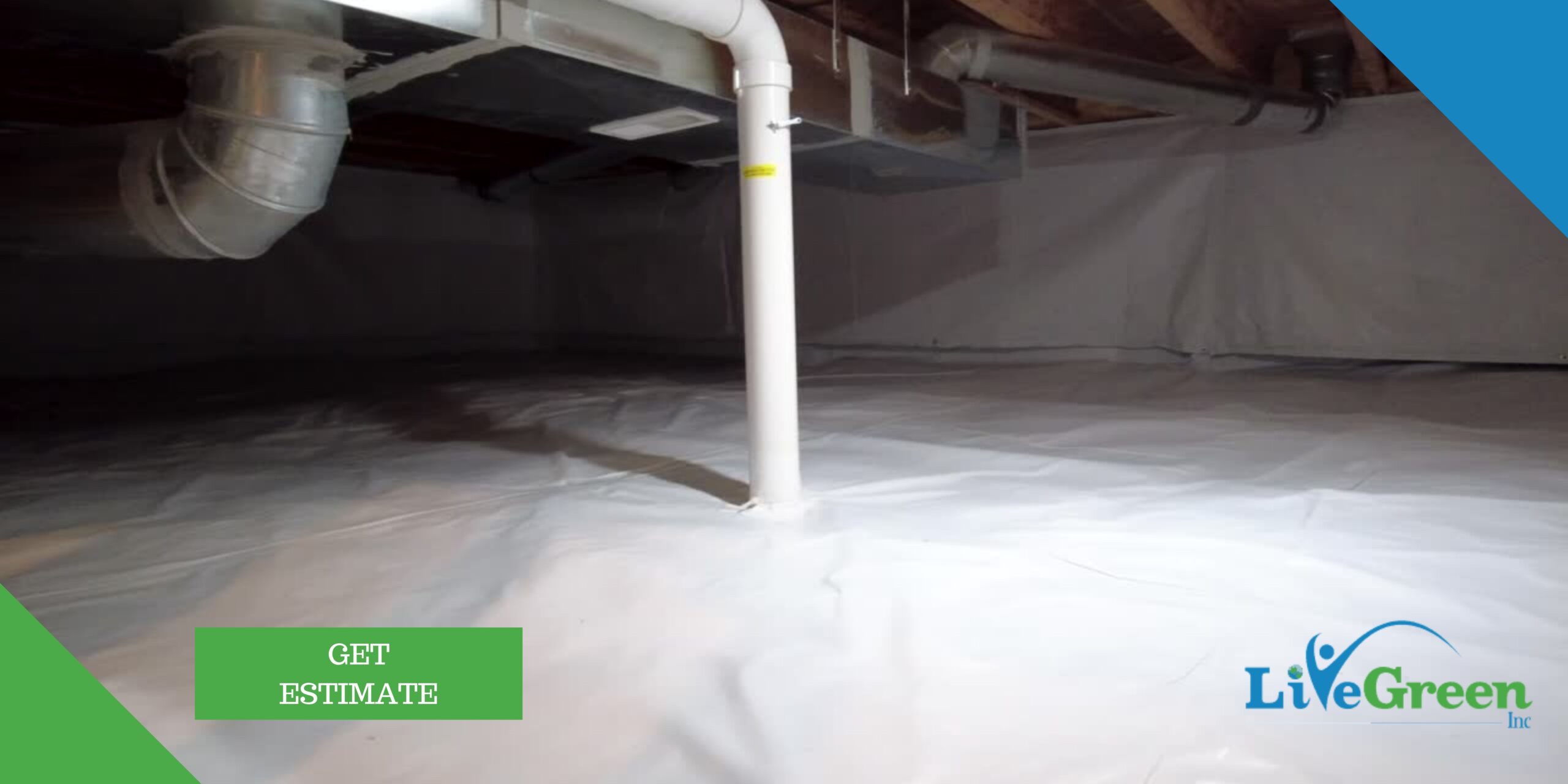
Sealing ground moisture at the source is the foundation of any long-term crawl space solution in intown Raleigh’s humid microclimate.
A Century of Deferred Maintenance — Hidden in Plain Sight
Here is the reality of what happens in a crawl space that has been vented and open for 80 or 100 years in a southeastern climate: the damage accumulates slowly, invisibly, and in ways that don’t announce themselves until they’re serious.
In the first decade, moisture causes mold spores to colonize the wood surfaces — floor joists, subfloor sheathing, the underside of hardwood flooring. The colonies aren’t yet large enough to cause structural problems, but they’re releasing spores into the living area above. Musty odors develop. Allergy sufferers notice.
In the second and third decades, the wood begins to soften in the most exposed areas. Floor joists near foundation vents — where outdoor air hits them directly — begin to show surface decay. Insulation, if any was ever installed, absorbs moisture and compresses, losing its thermal value entirely. The subfloor sheathing develops soft spots.
By the time a home is 50, 70, or 100 years old — as many homes in Mordecai, Boylan Heights, and the Person Street corridor are — the structural wood in the crawl space may be significantly compromised even when the home above looks and feels perfectly solid. Wood rot doesn’t announce itself from the first floor. It works quietly, from the outside surface of the joist inward, until something forces the issue.
That “something” is usually a home inspection — either when the owner tries to sell, or when a perceptive homeowner finally ventures into the crawl space with a flashlight.
What We Typically Find in Intown Raleigh Crawl Spaces
- Mold on floor joists and subfloor sheathing — Almost universal in homes older than 30–40 years with original vented crawl spaces. Surface mold is common even in homes that appear well-maintained above ground.
- Failed or missing insulation — Batt insulation between floor joists absorbs moisture over years and decades, compresses against the vapor barrier or bare soil, and provides little remaining thermal value. In many older homes we inspect, it has simply fallen entirely.
- Wood rot in joists near foundation vents — The areas closest to perimeter vents receive the most direct exposure to outdoor air and show deterioration first. In severe cases, joists in these areas require sistering or replacement before encapsulation can proceed.
- Original bare-earth floors with no vapor barrier — Many Mordecai and early Oakwood homes were built without any ground cover at all. Ground moisture evaporates directly into the crawl space continuously.
- Pest and rodent evidence — Open foundation vents are an open door for mice, rats, and insects. A damp, dark crawl space with organic material (degrading wood) is ideal habitat. We find evidence of infestation in a significant percentage of intown Raleigh crawl space inspections.
- Deteriorated or missing vapor barriers — Homes where a vapor barrier was added at some point in the past often have barriers that have degraded, shifted, or been damaged — providing minimal protection while giving owners a false sense that the crawl space has been addressed.
The Intown Raleigh Renovation Blind Spot
These neighborhoods attract a certain kind of homeowner: people who care deeply about original details, who research historic paint colors and source period-appropriate hardware, who spend weekends refinishing original heart pine floors or restoring original built-ins. It’s some of the most thoughtful, invested homeownership in all of Raleigh.
And yet, in nearly every intown Raleigh home we inspect, the crawl space hasn’t been touched in decades — if ever. Owners who can tell you the original architect of their Boylan Heights foursquare have never been in the crawl space beneath it.
This isn’t negligence. It’s invisibility. The crawl space doesn’t come up during the excitement of buying an intown home. It isn’t part of the renovation conversation. Nobody at the paint store asks about it. And because its problems develop slowly and invisibly, there’s rarely a single moment that forces the issue — just a gradual accumulation of small signs that are easy to explain away individually.
“Every dollar you invest in restoring the original features of an intown Raleigh home is better protected when the crawl space below it is sealed and dry. The two are directly connected.”
The connection is literal: moisture migrating up from the crawl space warps original hardwood floors from below. It causes original plaster walls to develop persistent damp spots. It drives the musty quality that some buyers perceive as simply “what old houses smell like.” It accelerates paint failure on first-floor window sills and baseboards. And it contributes to the indoor air quality that everyone who lives in the home breathes every day.
Addressing the crawl space isn’t separate from the work of preserving an intown Raleigh home. It is foundational to it — quite literally.
What Full Encapsulation Looks Like in an Older Intown Home
Encapsulating the crawl space of a century-old home requires a thorough assessment before installation begins. Unlike newer construction, older intown homes may have structural conditions that need to be addressed alongside — or before — the encapsulation system is installed.
LiveGreen’s process for older homes starts with a complete inspection: we document what we find, assess the structural condition of joists and subfloor sheathing, identify any active water intrusion points, and give you an honest picture of what the crawl space actually looks like before recommending a scope of work.
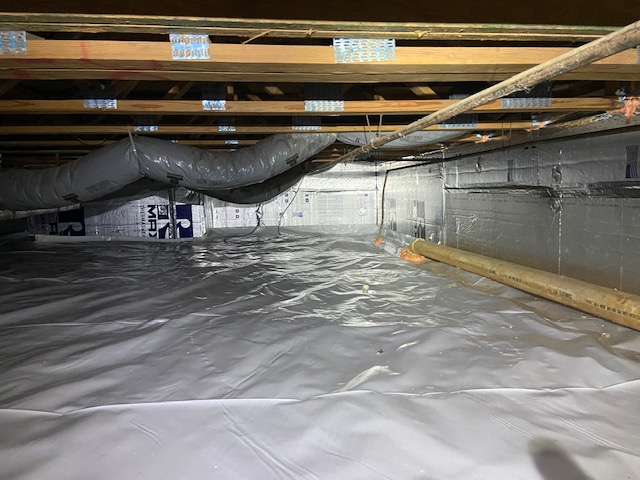
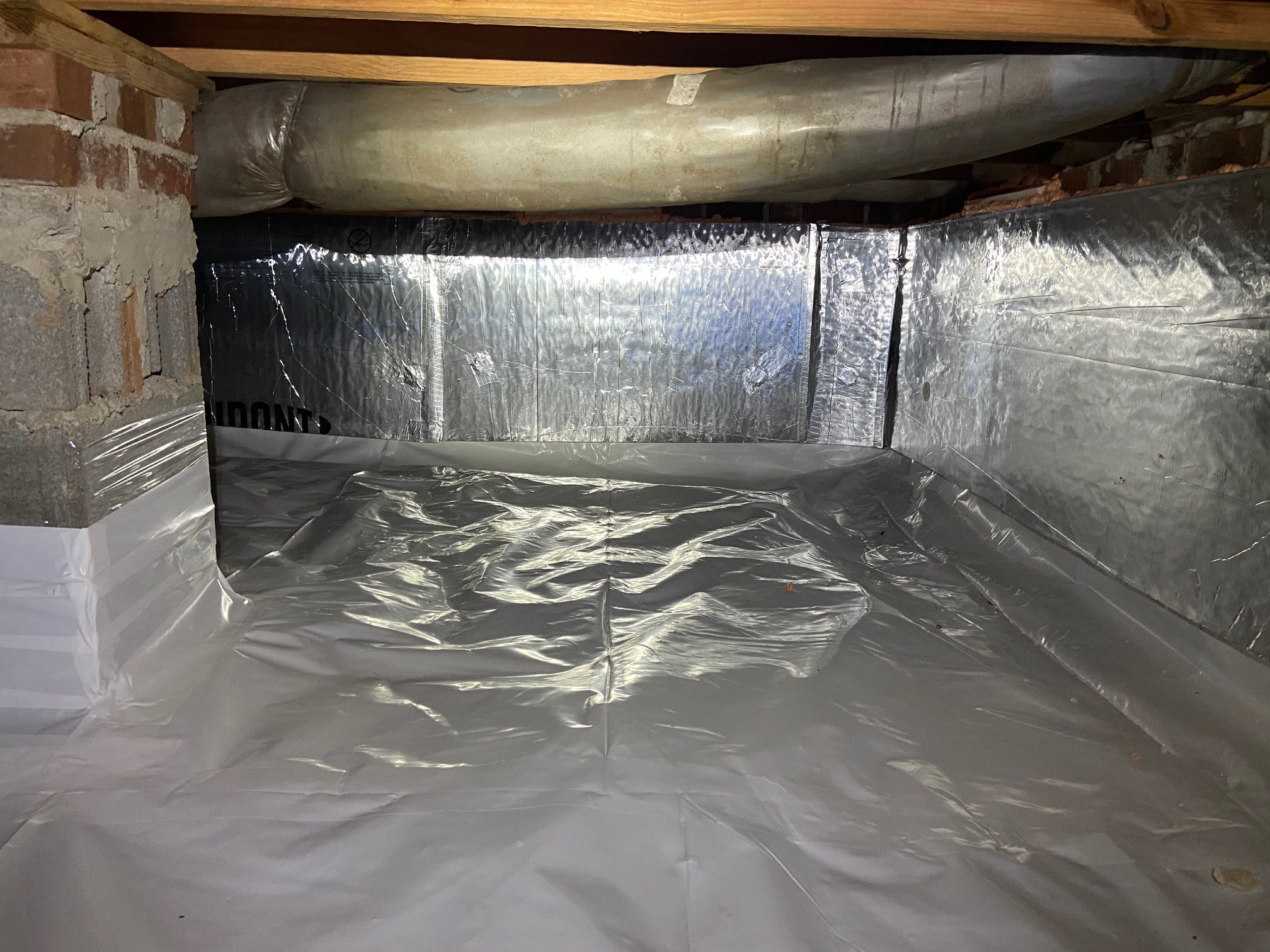
LiveGreen’s Full Encapsulation System for Older Intown Homes
- Pre-installation structural assessment — We identify any wood rot, mold remediation needs, or insulation removal required before the encapsulation system is installed. We’re transparent about what we find and don’t recommend more than your home actually needs.
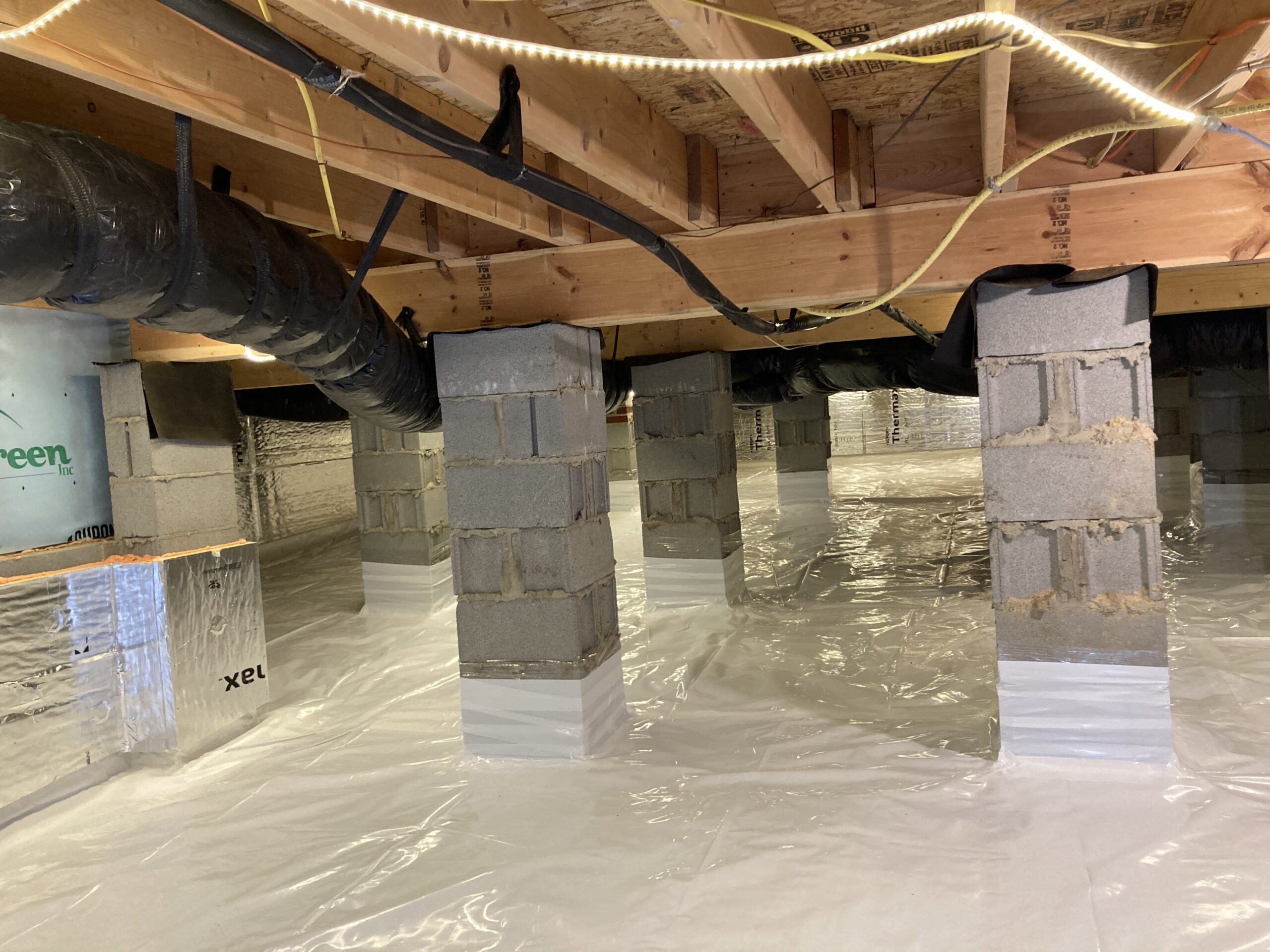
- Heavy-duty reinforced vapor barrier — A thick, durable liner covers the entire crawl space floor and is sealed up the foundation walls — replacing bare soil or degraded original vapor barriers with a long-lasting sealed surface.
- Foundation vent sealing — Original brick or concrete block foundation vents are permanently sealed, ending the summer cycle of humid air condensing on wood surfaces inside the crawl space.
- Sealed penetrations — Plumbing, electrical, and HVAC penetrations through the subfloor are sealed — an especially important step in older homes where decades of modifications have created numerous unsealed openings.
- Crawl space dehumidifier — Active humidity management inside the sealed space, maintaining safe moisture levels year-round regardless of outdoor conditions.
- Drainage solutions where needed — For homes in low-lying sections of Mordecai, Boylan Heights, or along the Person Street corridor where groundwater intrusion is active, interior drainage channels and a sump pump provide permanent water management.
What Encapsulation Means for Your Home’s Value — and Your NextDoor Feed
Intown Raleigh real estate has seen some of the strongest appreciation in the metro over the past decade. Homes in Boylan Heights, Mordecai, and the Person Street corridor that sold for $300,000 a decade ago are now trading at multiples of that. Buyers in this market are paying for quality, character, and — increasingly — for homes that have been properly maintained, not just cosmetically updated.
A home inspection that flags crawl space mold, failed insulation, or wood rot is a problem at any price point. In the $500,000–$800,000+ range where much of intown Raleigh now trades, it’s a serious negotiating liability. Buyers and their agents know what a crawl space issue costs to remediate, and they price it accordingly — often demanding credits well above the actual repair cost to account for perceived uncertainty.
A professionally encapsulated crawl space, documented and transferable, is a clean answer to that concern before it ever comes up. And in neighborhoods where word travels fast on NextDoor and neighborhood Facebook groups, being the homeowner who took care of the whole house — not just the visible parts — is a reputation worth having.
Ready to Find Out What’s Under Your Intown Raleigh Home?
LiveGreen Inc offers free crawl space assessments for homeowners throughout Mordecai, Boylan Heights, Oakwood, Person Street, and all of intown Raleigh. Honest findings, no pressure.
Get Your Free Quote →Prefer to talk to someone directly? Call us today for a free crawl space assessment — no pressure, no obligation.
(919) 453-6411Frequently Asked Questions
Answers to common questions from Mordecai, Boylan Heights, Person Street & intown Raleigh homeowners
It’s never too late — but the assessment matters more in older homes than anywhere else. Before we recommend encapsulation, we inspect the structural condition of your floor joists, subfloor sheathing, and foundation walls. If there’s active wood rot that has compromised structural members, we’ll tell you what needs to be addressed first. In most cases, even homes with significant crawl space history are excellent candidates for encapsulation — we remediate what’s there, install the system, and stop the next 50 years of damage from happening. The most common regret we hear from intown Raleigh homeowners is that they waited longer than they should have.
It’s common — but it isn’t normal, and it isn’t something you have to live with. That persistent earthy or musty smell is almost always crawl space air migrating into your living area through the subfloor. In intown Raleigh’s older homes, where the crawl space may have bare earth floors and decades of mold growth on wood surfaces, that air carries mold spores and high humidity into the home continuously. After encapsulation, the smell typically disappears within a few weeks as the crawl space dries out and the source of the odor is eliminated. Many homeowners tell us it’s one of the most immediately noticeable changes after the project is complete.
Crawl space encapsulation is subsurface work and does not require approval from Raleigh’s Historic Development Commission, which governs exterior alterations that are visible from the public right-of-way. Standard building permits may apply depending on project scope — particularly if drainage or structural work is involved — and LiveGreen handles all permitting as part of the project. We work in Raleigh’s historic districts regularly and are familiar with what’s required. Nothing about the encapsulation process alters the exterior appearance or historic character of your home.
Yes — and mixed foundation configurations are actually quite common in older intown Raleigh homes that have been added onto over the decades. We encounter crawl spaces combined with partial slabs, low-clearance areas, and transitions between different foundation types regularly. We assess the full foundation footprint during our inspection and design a system that addresses the moisture pathways specific to your home’s configuration. These projects require more customization than a straightforward crawl space, and we’re experienced handling them throughout intown Raleigh’s older housing stock.
During your free inspection, we’ll assess the extent of any wood rot and give you an honest picture of what’s there. Minor surface rot on joists is often addressed as part of the encapsulation project. More significant structural deterioration — sistering damaged joists, replacing sections of subfloor — may require a licensed contractor, and we’ll tell you clearly if that’s the case and what to look for. We don’t recommend encapsulation on top of structural problems that need to be fixed first; that’s not good for you or for the long-term integrity of the work we do.
A sealed crawl space significantly reduces radon infiltration by closing off the primary pathway radon uses to enter homes — direct soil contact through an open crawl space floor. In homes where radon levels are elevated, encapsulation is often a key part of the mitigation strategy. LiveGreen also offers professional radon testing and mitigation services, and we can test your home as part of the assessment process. Given that many intown Raleigh homes have never been radon-tested despite being decades old, this is a worthwhile step to take alongside any crawl space project.
Older homes in neighborhoods like Mordecai, Boylan Heights, and the Person Street corridor vary widely in crawl space size, configuration, and condition — so there’s no single number that applies across the board. Homes that require mold remediation or insulation removal before encapsulation will have higher project costs than those with clean crawl spaces. LiveGreen provides free, detailed on-site assessments with fully itemized quotes — no guesswork, no hidden costs. We explain every line item and we don’t recommend services your home doesn’t need.
What Raleigh Homeowners Are Saying
