

Spray Foam Insulation for Cloverdale Residents: Your Neighbors Already Know LiveGreen
Cloverdale is one of those solid Raleigh neighborhoods where people put down roots. Good schools nearby, mature trees, and homes with real character. But that character comes with a catch—most Cloverdale homes were built before modern insulation standards existed. If your upstairs is sweltering in August and freezing in January, spray foam insulation for Cloverdale residents is probly the single best upgrade you can make.
LiveGreen Inc. is a Raleigh insulation contractor that’s been working in neighborhoods like Cloverdale for years. We specialize in spray foam because, frankly, its the only insulation method that actually solves the problems older Raleigh homes deal with. Not just slows them down—solves them.
Ready To Get Started?
Contact Us Today to Schedule Your Energy Assessment and Free Quote.
Spray Foam Insulation
Most Cloverdale homes still have the original fiberglass batts that were put in when the house was built. That stuff was fine for its time, but fiberglass doesnt stop air movement. It just slows heat transfer a bit. Meanwhile, air—carrying heat, humidity, dust, and allergens—moves freely through every gap and seam in your walls and attic.
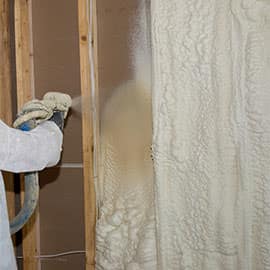
Spray foam insulation works completly different. It goes on as a liquid, expands on contact, and bonds directly to whatever surface its applied to. Every crack, gap, wire hole, and pipe penetration gets sealed. Once it cures, you’ve got a continuous air barrier that fiberglass cant come close to matching.
We install two types depending on the application:
- Open-cell spray foam: Lighter and more flexible. Great for attics and interior walls in Cloverdale homes. It also helps reduce noise—if you’re near Wade Avenue or the Beltline, thats a nice bonus.
- Closed-cell spray foam: Denser, stronger, and it blocks moisture. This is what we put in crawl spaces and exterior walls. With Raleigh’s humidity, keeping moisture out of your wall cavities matters a lot—especially in older Cloverdale construction where there’s no house wrap or vapor barrier.
The U.S. Department of Energy says that air leaking through gaps and cracks can account for 25–30% of a home’s heating and cooling costs. That’s real money leaving your Cloverdale home every month.
Insulation Installation
We don’t do phone quotes. Every Cloverdale home is built a little diffrent, and the only way to give you an honest price is to actually look at your house. Our insulation installation process starts with a hands-on inspection of your attic, crawl space, and walls.
Here’s how a typical job goes in the Cloverdale area:
- Walk-through and evaluation: We check everything—existing insulation condition, air leak locations, moisture issues, and HVAC ductwork routing. This takes about an hour for most Cloverdale homes.
- Area preparation: We lay down protective coverings, mask off anything that shouldnt get foam on it, and remove old insulation if needed.
- Foam application: Our crew applies the spray foam in controlled passes, building up to the right thickness. Rushing this step is how you get bad results—we take the time to do it right. A typical Cloverdale attic takes around half a day.
- Cleanup and review: We clean up completly, walk you through the finished job, and answer questions. You’ll notice the diffrence in your home’s comfort within a day.
Insulation Removal
Before new spray foam can go in, the old stuff usually has to come out. We see this all the time in Cloverdale—attics packed with fiberglass batts from the 1970s or 80s that have compressed into flat, useless layers. Or blown-in cellulose thats settled down to two or three inches when it was originally eight.
The worst cases are when old insulation has water damage. A small roof leak over the years can soak fiberglass, and wet fiberglass grows mold. We’ve opened up Cloverdale attics where the insulation was dark, matted, and smelled musty. Thats not something you want sitting above your living space. It has to be removed before anything new goes in.
Our insulation removal process uses industrial vacuum equipment and full containment so nothing gets into your home’s air. We bag it, haul it, and dispose of it the right way. Once the space is clean, we can see exactly where the air leaks are and spray accordingly.
Energy Audit
Not every Cloverdale homeowner knows why their energy bills are high. Sometimes you just know the house is uncomfortable—hot upstairs, cold downstairs, stuffy in the summer, drafty in the winter—but you cant pinpoint the cause. Thats exactly what an energy audit is for.
We use thermal imaging cameras to scan your home’s walls, ceilings, and floors. The camera shows temperature differences in real time, so we can literally see where heat is moving through your building envelope. We also do blower door testing, which measures total air leakage and tells us how tight or leaky your home is overall.
For Cloverdale homes, the results almost always point to the attic and crawl space. These are the two biggest problem areas in Raleigh-area homes built before the 1990s. Once we have the data, we can show you exactly where spray foam will make the biggest impact and help you prioritize if your doing the project in stages.
Attic Insulation
Your attic is where your Cloverdale home loses the most energy. Period. In the summer, Raleigh sun beats down on the roof and your attic turns into an oven—easily 140 degrees on a hot day. That heat presses down through the ceiling into your living space. In the winter, every bit of warm air you pay to heat rises straight up through the attic and out the roof.
The big problem with most Cloverdale attics is that your HVAC ducts run through that unconditioned space. So your air conditioner is pushing cooled air through ducts sitting in 140-degree heat. By the time that air reaches your upstairs vents, its already warmed up. Your system runs and runs but the rooms never quite get cool enough.
Spray foam on the underside of the roof deck changes everything. Your attic becomes part of the conditioned space. The ducts are now inside the insulation barrier instead of outside it. Homeowners in Cloverdale regularly tell us the upstairs is finally comfortable for the first time since they moved in.
Why Cloverdale Residents Trust LiveGreen
We’re based right here in Raleigh. Our crew isn’t flying in from out of state—they live in the Triangle, drive these roads, and know what Raleigh weather does to homes. The humid summers, the surprise ice storms, the weeks of 95-degree heat in July and August—we deal with all of it, and we know how it affects insulation performance in homes like the ones in Cloverdale.
We’ve done spray foam work throughout Cloverdale and the neighborhoods nearby—Fairmont, Hillsborough Street area, Cameron Village, Method, and across west Raleigh. We’re familiar with the building styles, the common problems, and the best ways to solve them.
And we’re straight with you about pricing. Spray foam costs more then fiberglass upfront. But for a typical Cloverdale home, the energy savings usually cover the price diffrence in 3–5 years, and you feel the comfort improvement the very first day. We give you a detailed estimate with real numbers—no hidden fees, no bait-and-switch.
Get Your Free Estimate in Cloverdale
If your Cloverdale home is costing too much to heat and cool, or if you’ve got rooms that are never quite comfortable, give us a call. We’ll come out, take a look, and tell you exactly what spray foam insulation can do for your specific situation. No pressure, no sales pitch—just an honest assessment from a local crew that does this every day.
LiveGreen Inc.
Phone: (919) 453-2411
Website: livegreeninc.com
Serving Cloverdale, Fairmont, Method, Cameron Village, Hillsborough Street, and all of Raleigh, NC
Questions Cloverdale Homeowners Keep Asking
Yes. Spray foam works great in older construction. In fact, its often the best option because older homes have so many irregular gaps and openings that batt insulation can’t fill properly. The foam expands to conform to whatever shape the cavity is, sealing places that would otherwise stay open. We’ve installed spray foam in Cloverdale homes from the 1950s through the 2000s without any issues. The key is having experienced installers who know how to work with older framing and wiring.
In almost every case, yes. Most Cloverdale homeowners see a 30–50% reduction in heating and cooling costs after spray foam installation. The exact number depends on your home’s current condition, the areas we insulate, and your thermostat habits. But the savings are real—we have Cloverdale customers who’ve tracked there bills month-over-month and the diffrence is clear within the first billing cycle.
Open-cell is lighter, less expensive, and great for attics and interior spaces. It has a lower R-value per inch (about 3.7) but its excellent at air sealing. Closed-cell is denser, has a higher R-value per inch (about 6.5), and acts as a moisture barrier. For Cloverdale homes, we usually recommend open-cell in the attic and closed-cell in the crawl space. But every home is diffrent, and we’ll recommend whats best for your situation during the free estimate.
