

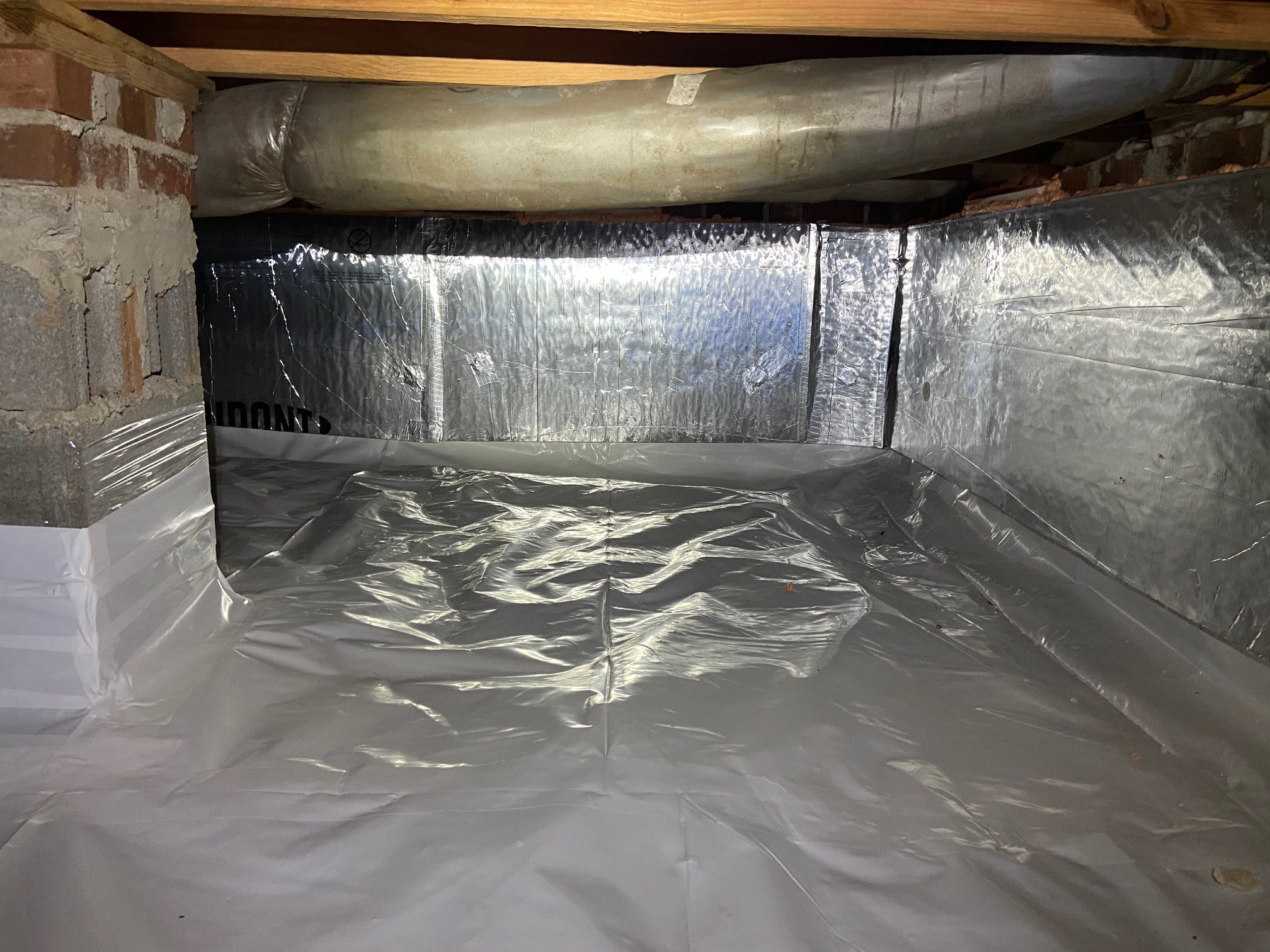
A lot of the people buying new homes in Knightdale and Clayton right now didn't grow up in the Triangle. They moved here for a job — many of them tied to the wave of pharmaceutical and biomanufacturing investment that's landed along the US-70 corridor near Clayton in recent years — closed on a new-construction home in a matter of weeks, and started their new life without ever hearing the phrase "crawl space encapsulation."
That's the problem nobody talks about in Eastern Wake County: it's not that the homes are poorly built. It's that a huge share of new owners here are brand new to North Carolina altogether, with zero frame of reference for what a humid Piedmont summer does to an unsealed crawl space over time.
LiveGreen has been out to new-construction homes throughout Knightdale, along US-64 Business, and in Clayton's newer subdivisions off the US-70 Bypass, and the story is nearly always the same: a code-compliant crawl space, a homeowner who's never lived anywhere humid enough for it to matter before, and no idea a follow-up inspection is even something people do.
"If you moved to Knightdale or Clayton from somewhere with a basement or a slab foundation, your new crawl space isn't something anyone told you to think about — and that's exactly why it needs a look."
Why So Many New Owners Here Are New to North Carolina, Period
Clayton has become one of the state's fastest-growing manufacturing hubs, with major employers building out large-scale operations along the US-70 corridor and pulling in workers relocating from across the country. Knightdale, sitting just up US-64 Business from Clayton and a short commute from Raleigh, has absorbed a lot of that same growth with new subdivisions filling in on both sides of town.
For a buyer coming from a state where basements are standard, or where humidity simply isn't the same year-round issue, a crawl space is an unfamiliar part of the house to begin with. Nobody explains during closing that the vapor barrier under the floor is a code minimum, not a finished system — so it just doesn't occur to most new owners to ask.
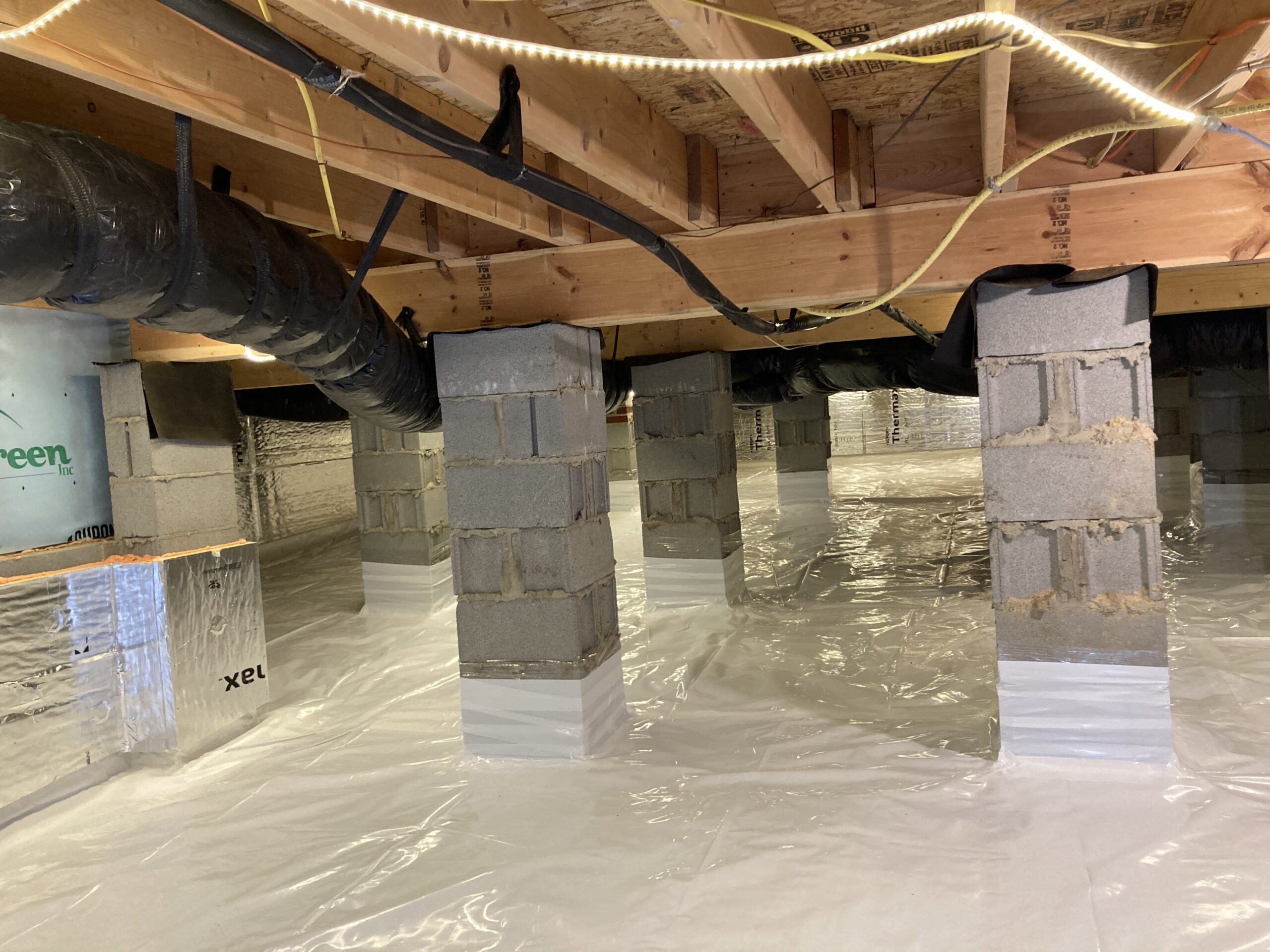
A code-minimum vapor barrier covers the ground. It doesn't seal the foundation vents that let humid outdoor air in every summer — that's the step most new owners never hear about.
What Nobody Explains at Closing
North Carolina's building code requires new homes with crawl spaces to include a vapor barrier over the ground and either foundation vents or a mechanical ventilation system. It doesn't require sealed vents, a heavy-duty liner, or a dehumidifier. Those upgrades represent best practice for a humid climate, not the legal minimum, and production builders working at scale in Knightdale and Clayton build to the minimum every time.
Wake and Johnston County soil in this part of the Triangle is the same dense, moisture-retentive clay found throughout the Piedmont. Combine that with humid air flowing freely through open foundation vents, and a code-minimum crawl space starts accumulating moisture well before most new owners have finished unpacking.
Myths We Hear Constantly From New Knightdale and Clayton Homeowners
Moving here from somewhere else — or moving here for the first time in your life, period — comes with a specific set of assumptions. Here's how those assumptions compare to what we actually find.
"I've never had a crawl space before, so I don't know what could even go wrong with it."
That's exactly why it's worth a look. Crawl spaces are unfamiliar territory for a lot of new North Carolina residents, and problems that would be obvious in a basement stay hidden until someone checks.
"My relocation package included a home inspection, so any crawl space issue would have been caught."
A standard pre-purchase inspection checks that a new home meets code — it doesn't evaluate long-term moisture risk in North Carolina's climate the way a dedicated crawl space assessment does.
"It's only been a year or two since I moved in. There's no way there's already a problem."
One or two humid Piedmont summers is enough time for condensation to begin affecting joists and subfloor sheathing. Catching it now keeps the fix simple and preventive.
What Full Encapsulation Adds That Your Builder Didn't
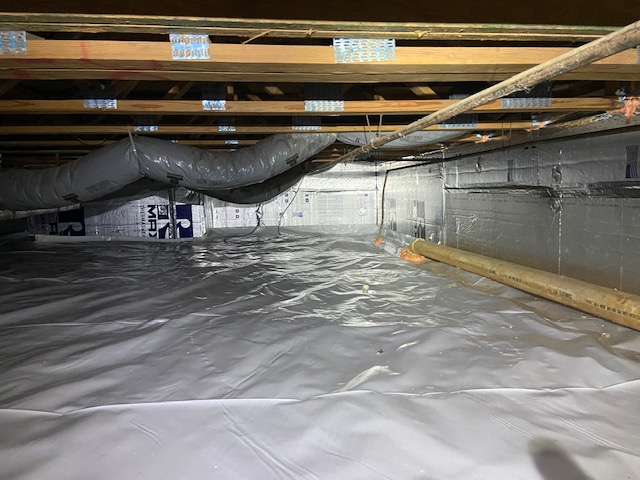
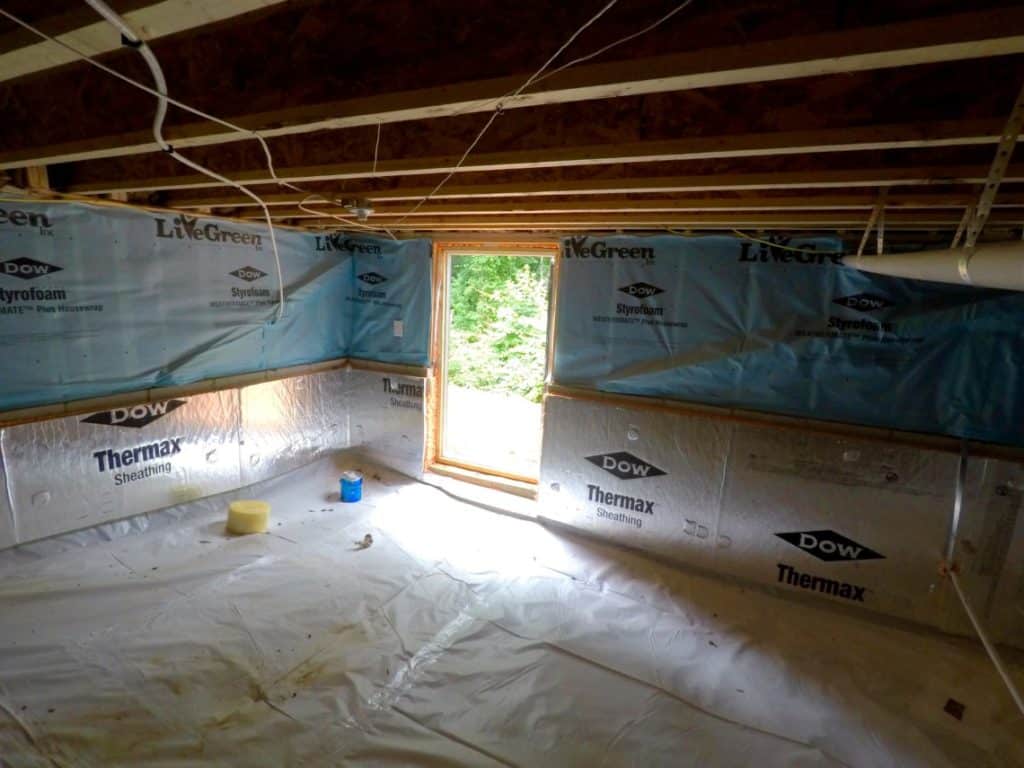
A LiveGreen encapsulation system closes the two gaps a code-minimum crawl space leaves open — the ground and the vents — and it's the same explanation we give every new Knightdale and Clayton homeowner meeting a crawl space for the first time.
What LiveGreen Adds Beyond Builder-Standard Construction
- Heavy-duty reinforced vapor barrier — replaces the thin poly sheet installed at construction with a liner built to resist puncture and long-term vapor transmission.
- Foundation vent sealing — closes off the humid outdoor air flowing into a vented crawl space every summer, the single biggest driver of moisture buildup.
- Sealed penetrations and seams — addresses the plumbing, HVAC, and electrical openings through the subfloor that production builders typically leave unsealed.
- Crawl space dehumidifier — provides active humidity control year-round instead of relying on passive vents that don't work in this climate.
- Foundation wall insulation — moves insulation from the floor joists to the foundation walls, bringing the crawl space into your home's thermal envelope.
- Drainage solutions where needed — a perimeter drain and sump pump for lower-lying lots common in newer Eastern Wake County subdivisions.
A Quick Orientation for New Triangle Residents
If you're new to Knightdale, Clayton, or North Carolina generally, here's the short version: this climate is more humid, more of the year, than most of the country. A crawl space here isn't a formality — it's an active system that needs to keep pace with that humidity, and a code-minimum vapor barrier alone isn't built to do it.
You don't need to become an expert. You need one free inspection to know exactly where your home stands, so you're not finding out the hard way three summers from now.
New to Knightdale or Clayton? Start With a Free Inspection.
LiveGreen Inc offers free on-site crawl space assessments for homeowners throughout Knightdale, Clayton, and the rest of Eastern Wake County. We'll show you exactly what we find.
Get Your Free Quote →Prefer to talk to someone directly? Call us today for a free crawl space assessment — no pressure, no obligation.
(919) 453-6411Frequently Asked Questions
Answers to common questions from Knightdale and Clayton homeowners
The short version: North Carolina's climate is humid for most of the year, and a crawl space with just a builder-installed vapor barrier isn't fully sealed against that humidity. A free inspection is the easiest way to find out exactly where your specific home stands, with no assumptions required.
It's actually the ideal time. The first one to three years of occupancy are when encapsulation is purely preventive, meaning the crawl space is still structurally sound and the project stays simple and efficiently priced. Waiting longer risks turning a preventive upgrade into a repair.
A standard home inspection confirms the crawl space meets code at the time of the report. It doesn't evaluate long-term moisture risk specific to North Carolina's climate, which is a different question a dedicated crawl space assessment answers.
No. A builder-installed vapor barrier is a thin poly sheet over the crawl space floor that blocks direct soil contact but does nothing to stop humid outdoor air from entering through open or louvered foundation vents. Full encapsulation seals both the ground and the vents with a substantially thicker liner.
Look for black or gray spotting on floor joists or subfloor sheathing, insulation that looks wet or has fallen from between the joists, standing water or dark staining on the vapor barrier, and a musty smell when you open the access door. Any of those signs means it's worth a professional look, which we provide at no cost.
Encapsulation is an upgrade, not a modification to a structural or mechanical system, and it does not void builder warranties. Proactively managing crawl space moisture protects the structural components most warranties cover. We're happy to answer specific questions about your builder's terms.
New-construction encapsulation is typically one of our most straightforward projects — no remediation, just installation of a complete system on a clean crawl space. Cost depends on your crawl space square footage and which components fit your home's conditions. LiveGreen provides free on-site quotes with full transparency and no pressure to add services you don't need.
What Knightdale and Clayton Homeowners Are Saying
Where We Serve
Based at 5001 Old Poole Road, Raleigh, NC 27610 — serving homeowners throughout Wake County and the greater Triangle.
(919) 453-6411 · Mon–Fri 7:00 AM–5:00 PM
