

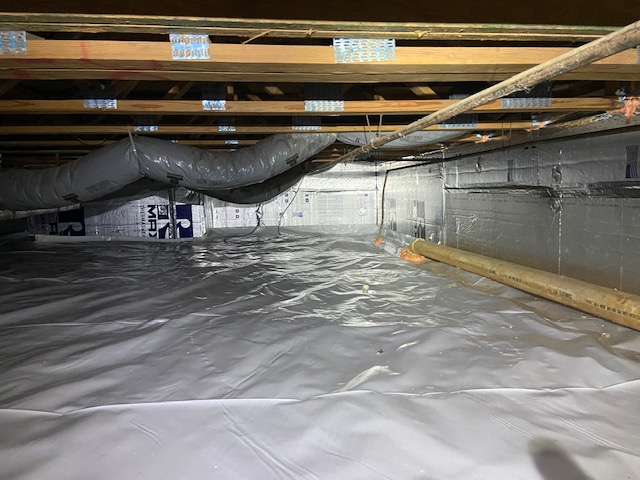
Chatham Park has turned Pittsboro from a small courthouse-circle town into one of the largest master-planned communities on the East Coast, with new phases opening every year across land that was farmland and forest a generation ago. Walk through any of its newer sections — the tree-lined streets, the tidy front porches, the fresh sod — and everything reads as brand new, built right, and low-maintenance for years to come.
Underneath the floor, it's a different story. Built at Chatham Park's pace doesn't mean built for North Carolina's humidity.
Every crawl space in Chatham Park meets North Carolina's building code the day it's inspected. But code minimum and long-term protection from a Piedmont summer are two different standards, and the gap between them is exactly where LiveGreen gets called out to Chatham Park homes that are barely old enough to have a mortgage statement, let alone a maintenance history.
"A Chatham Park home built last year and a Chatham Park home built eight years ago have the exact same crawl space vulnerability — the calendar just hasn't caught up to the newer one yet."
Production Building at Chatham Park's Scale Means Code Minimum, Not Best Practice
Chatham Park's growth is measured in phases and pods, not single lots — entire sections of Pittsboro are being built out at a volume that requires builders to standardize everything, including how crawl spaces are finished. That standardization is efficient, and it's why homes here go from cleared lot to move-in ready faster than almost anywhere else in the Triangle.
It also means the crawl space gets the same treatment on every home in a section: a thin poly vapor barrier over bare soil and open or louvered foundation vents, because that's what North Carolina's code requires and what keeps a large-volume build on schedule. Nothing about that is a shortcut or a defect — it's simply the legal minimum, applied consistently across a community built at scale.
The problem is that the legal minimum was written for the state as a whole, not for a specific lot along the Haw River watershed with Chatham County's dense clay subsoil underneath it. Builders meet the standard. The climate doesn't care what the standard says.
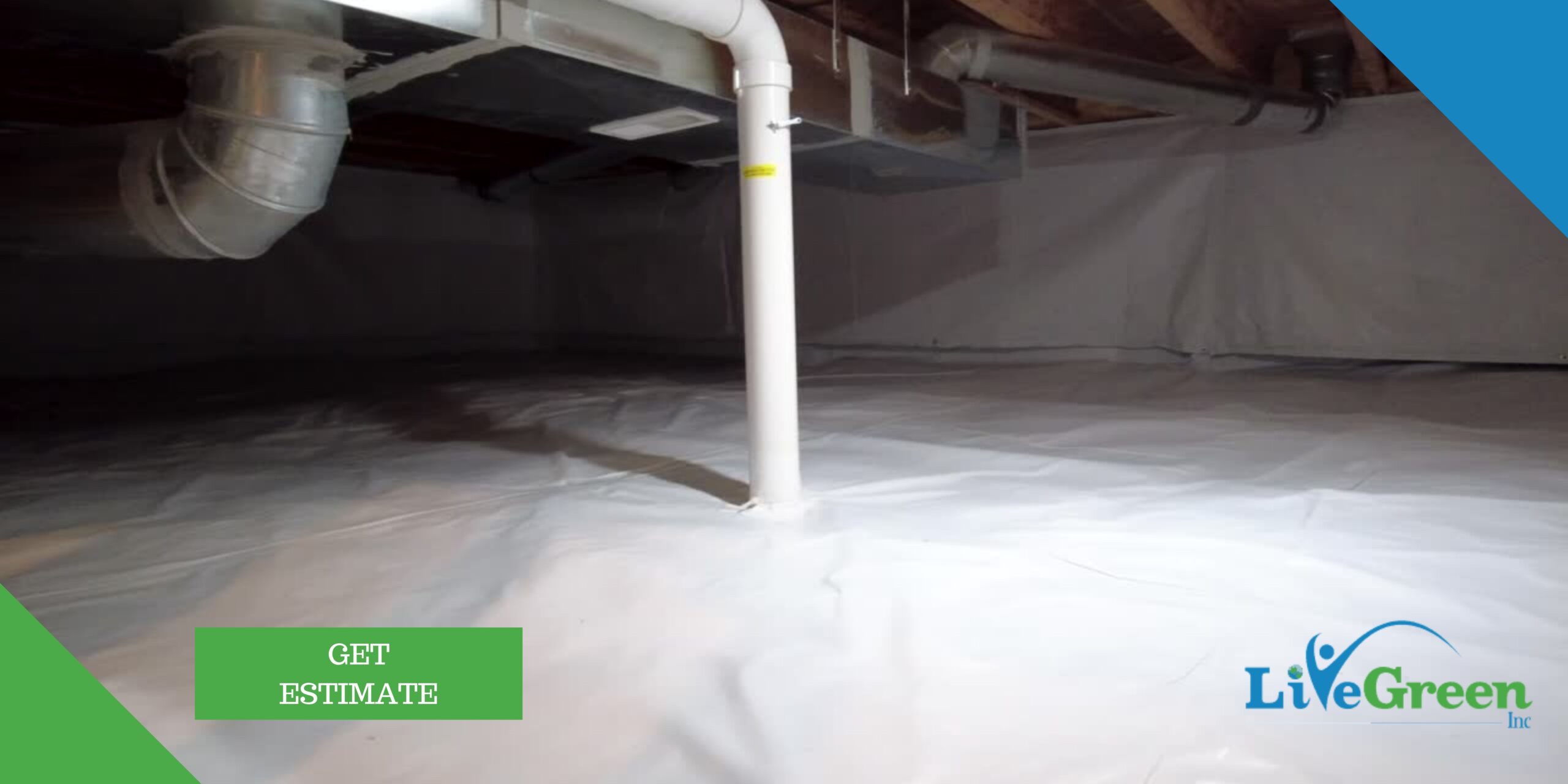
Sealing the foundation vents — not just laying a floor liner — is the step that actually stops humid outdoor air from reaching a Chatham Park crawl space.
Why Pittsboro's Land Adds Its Own Layer of Risk
Much of Chatham Park sits on land that was agricultural or wooded within the last two decades, graded and re-graded as each new phase breaks ground. Chatham County's Piedmont soil is heavy on clay, the same slow-draining, moisture-retentive subsoil found throughout the Triangle, and grading for a subdivision this size routinely strips the topsoil and exposes that clay at the surface across entire pods at once.
Add in the area's proximity to the Haw River and its network of feeder streams, plus a stormwater system that's still being built out phase by phase, and a fair number of Chatham Park lots sit closer to the water table than their new owners realize. Clay soil holds that moisture and releases it as vapor straight through the crawl space floor, whether the home was finished last month or five years ago.
Pittsboro's rapid growth is also drawing new residents from out of state — many arriving for jobs tied to the county's growing manufacturing base, including the major employers investing along the US-15-501 corridor. Buyers relocating from drier climates often have no frame of reference for what a humid Piedmont summer does to an unsealed crawl space, which makes the gap between "new" and "protected" even easier to miss.
Myths We Hear Constantly From Chatham Park Homeowners
Buying into a large, well-marketed master-planned community creates its own set of assumptions. Here's how those assumptions hold up against what we actually find during a free inspection.
"It's a master-planned community with strict building standards, so my crawl space must be better than average."
Chatham Park's design standards govern architecture, landscaping, and community amenities — not what happens beneath the subfloor. Crawl spaces are still built to the same statewide code as anywhere else.
"My home is only two or three years old, so there's nothing to check yet."
Two to three humid Chatham County summers is enough time for condensation to establish surface mold on joists and subfloor sheathing. We see it regularly in homes barely out of their builder warranty.
"My builder's warranty covers moisture problems if something goes wrong."
Most builder warranties cover structural defects and workmanship, not the ongoing effects of humid air and clay soil vapor over time. Long-term moisture management is the homeowner's responsibility once the keys change hands.
What Full Encapsulation Adds That Your Builder Didn't
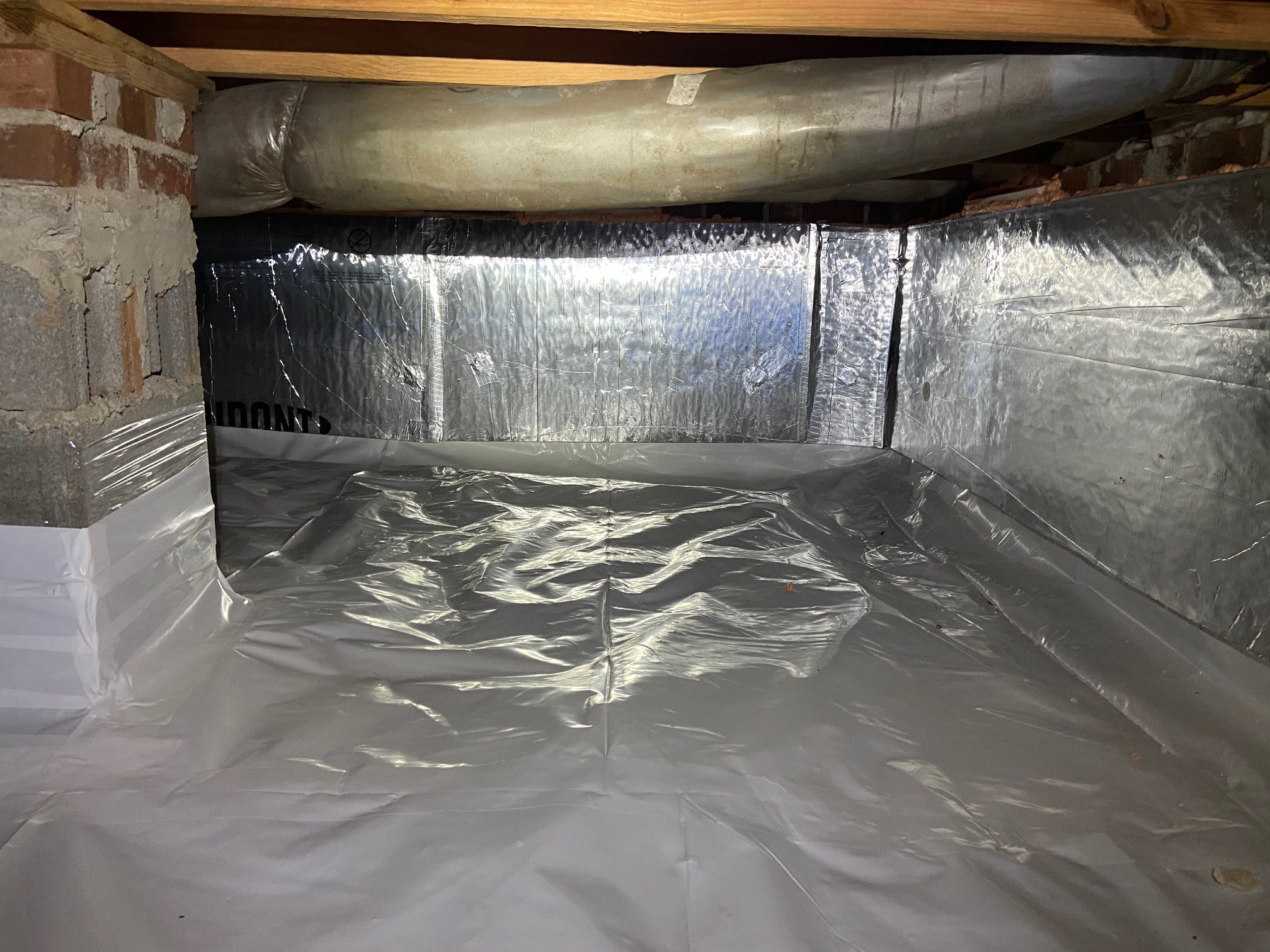
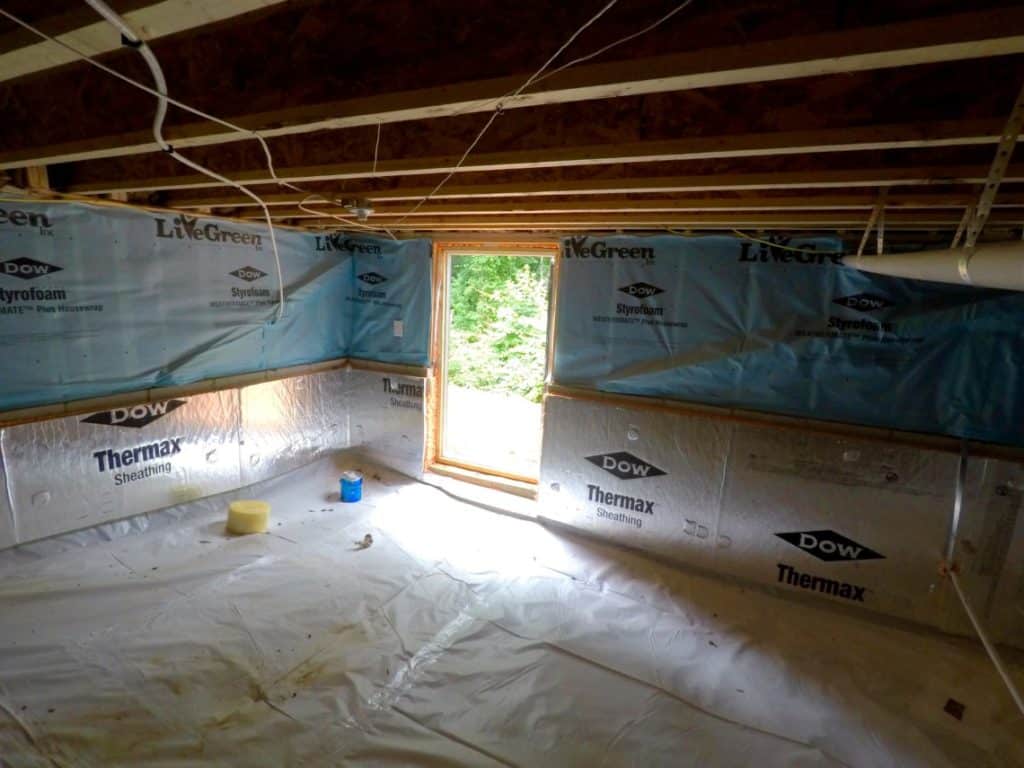
A LiveGreen encapsulation system closes the two gaps a code-minimum crawl space leaves open — the ground and the vents — and brings a Chatham Park crawl space up to genuine long-term protection instead of legal minimum.
What LiveGreen Adds Beyond Builder-Standard Construction
- Heavy-duty reinforced vapor barrier — replaces the thin poly sheet installed at construction with a liner built to resist puncture and long-term vapor transmission.
- Foundation vent sealing — closes off the humid outdoor air that flows into a vented crawl space every Chatham County summer, the single biggest driver of moisture buildup.
- Sealed penetrations and seams — addresses the plumbing, HVAC, and electrical openings through the subfloor that production builders typically leave unsealed.
- Crawl space dehumidifier — provides active humidity control year-round instead of relying on passive vents that don't work in this climate.
- Foundation wall insulation — moves insulation from the floor joists to the foundation walls, bringing the crawl space into your home's thermal envelope.
- Drainage solutions where needed — a perimeter drain and sump pump for lower-lying lots near Chatham Park's stormwater corridors and feeder streams.
If You Bought Resale in an Established Chatham Park Section
Chatham Park's earliest phases are old enough now that resale is picking up, and buyers moving into those established sections face a different question than the newest owners do: not "will this ever be a problem," but "has it already started." A home inspector who finds mold on subfloor sheathing during a resale inspection — even a relatively minor amount — has grounds to flag it prominently, and buyers who see that flag get nervous fast.
A documented, professionally installed encapsulation system answers that concern before it comes up, and it's a straightforward, efficiently priced project on a crawl space that's still structurally sound. Waiting until a sale is already in motion to address it is the more expensive path, both financially and for your timeline.
Find Out What's Actually Under Your Chatham Park Home
LiveGreen Inc offers free on-site crawl space assessments for homeowners throughout Chatham Park and greater Pittsboro. We'll show you exactly what we find.
Get Your Free Quote →Prefer to talk to someone directly? Call us today for a free crawl space assessment — no pressure, no obligation.
(919) 453-6411Frequently Asked Questions
Answers to common questions from Chatham Park and Pittsboro homeowners
It's actually the best time to act. The first one to three years of a new home's life are when encapsulation is purely preventive — the crawl space is structurally sound, so the project is straightforward and efficiently priced. Waiting until moisture has had several more Piedmont summers to work on the subfloor can turn a preventive upgrade into a repair project.
No. Chatham Park's design standards cover architecture, landscaping, and community amenities, but crawl spaces throughout the development are still built to the same statewide North Carolina code as any other new subdivision. The community's scale doesn't change the underlying moisture-control standard.
No, and it's the most common misunderstanding we run into. A builder-installed vapor barrier is a thin poly sheet over the crawl space floor that blocks direct soil contact, but it does nothing to stop humid outdoor air from entering through open or louvered foundation vents. Full encapsulation seals both the ground and the vents, and uses a substantially thicker, more durable liner.
Generally, lots closer to Chatham Park's stormwater corridors, retention areas, or the Haw River's feeder streams tend to sit closer to the water table and see more active moisture. That said, humid air and clay soil vapor affect crawl spaces throughout Pittsboro regardless of exact lot position — a free inspection is the only reliable way to know what's happening under your specific home.
Look for black or gray spotting on floor joists or subfloor sheathing, insulation that looks wet, sagging, or has fallen from between the joists, standing water or dark staining on the vapor barrier, and a musty smell when you open the access door. Any of those signs means it's time for a professional look — we're happy to provide one at no cost.
Encapsulation is an upgrade, not a modification to a structural or mechanical system, and it does not void builder warranties. If anything, proactively managing crawl space moisture protects the structural components most warranties cover. We're glad to walk through specifics if you have questions about your particular builder's terms.
New-construction projects tend to be our most straightforward jobs — no remediation or structural repair, just installation of a complete system on a clean crawl space. Cost depends on your home's crawl space square footage and which components fit your specific lot conditions. LiveGreen provides free on-site quotes with no surprise line items and no pressure to add services you don't need.
What Pittsboro Homeowners Are Saying
Where We Serve
Based at 5001 Old Poole Road, Raleigh, NC 27610 — serving homeowners throughout Wake County and the greater Triangle.
(919) 453-6411 · Mon–Fri 7:00 AM–5:00 PM
