

Construction Business Review invited LiveGreen to contribute a Vendor Viewpoint to its Insulation, Coating and Waterproofing section. Our Operations Manager, Matt Blaise, wrote it — and the argument he makes is one we have been making in Triangle crawl spaces for more than twenty years.
Why Crawl Spaces Matter More than Ever
Read the full article on Construction Business ReviewWhere this company started
The article opens with something we do not talk about often enough: LiveGreen exists because one of our founders went to a seminar. A local green building group was explaining the science behind sealed and conditioned crawl spaces, and what he heard matched the problem he was already seeing in house after house around here — inefficiency, and far too much moisture underneath. We decided to pioneer the approach in this market rather than wait for it to arrive.
That was more than twenty years ago, and the argument has aged well.
What the article covers
Matt makes the case that a sealed, conditioned crawl space belongs in the standard-practice column rather than the optional-upgrade one. The themes he works through:
- Out of sight, out of mind. Most homeowners spend little or no time under their own house, so they rely on whichever trade happens to go down there to report a problem. Small issues accumulate into large ones without anyone watching.
- Scoping the work is simpler than people expect. Practically every home on a crawl space gains efficiency and moisture protection from sealing and conditioning it. The houses that need less are the ones where something has already been done — a vapor barrier and dehumidification already in place means less work to finish the job properly.
- Expectations have moved, particularly on new builds. As buyers get better informed about building practice, high-efficiency equipment and crawl space encapsulation are increasingly assumed rather than upsold.
- An ounce of prevention. Getting ahead of a crawl space problem is consistently cheaper than reacting to one, and a sealed conditioned crawl buys homeowners something harder to price: not having to wonder about it.
“A crawl space may be out of sight, but it has a lasting impact on a home’s health, efficiency and comfort.”
Matt Blaise, in Construction Business Review
The full article is on Construction Business Review, and we would rather you read it there than read our summary of it.
Why this argument matters in North Carolina specifically
The article is written for a national construction audience, but the case lands hardest in exactly the market we work in. North Carolina is one of the largest crawl space markets in the country, and the Piedmont combines the two conditions that make vented crawl spaces fail: summer air carrying a dew point in the low 70s, and clay soil that holds and slowly releases water.
Put those together and the foundation vents that were supposed to dry a crawl space out are the reason it is wet. That is not a maintenance failure by the homeowner. It is a building convention inherited from drier climates, applied to a place it does not suit.
Which is why the framing in Matt's article — standard practice rather than optional upgrade — is the right one here. It is the same reasoning behind every sealed crawl space we install.
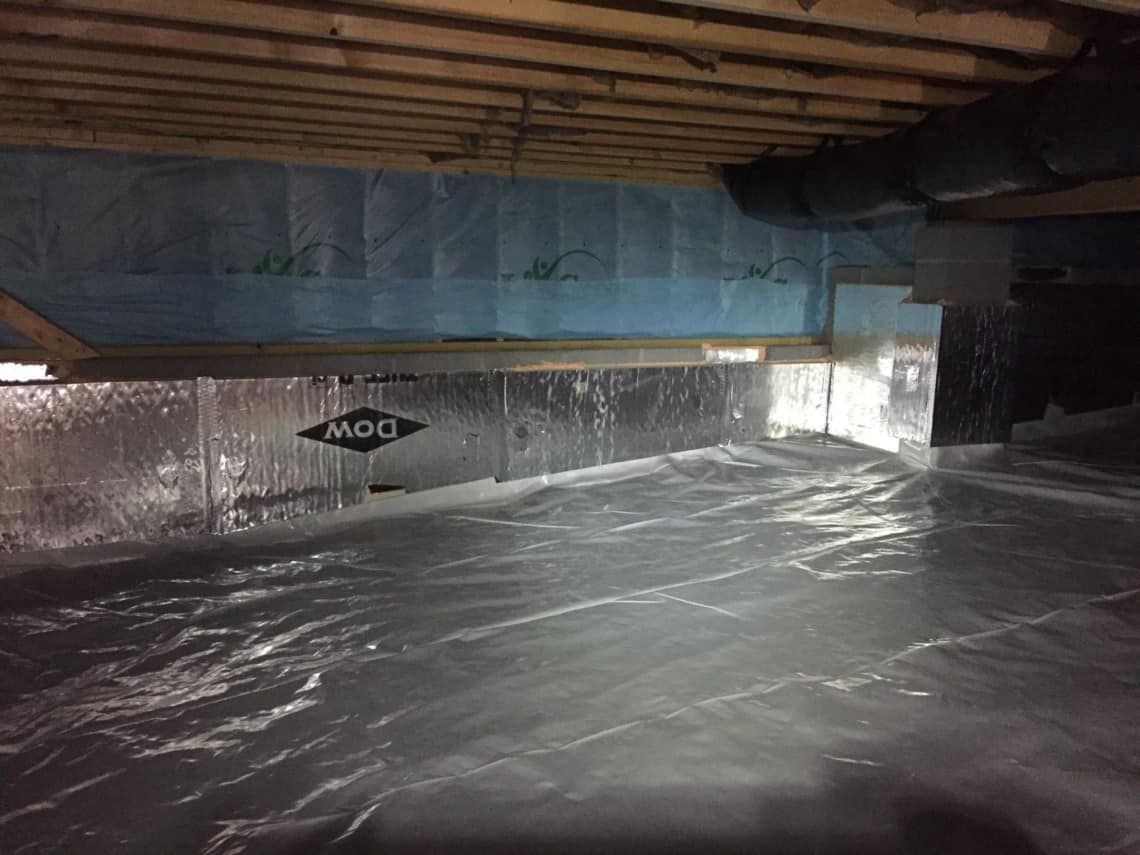
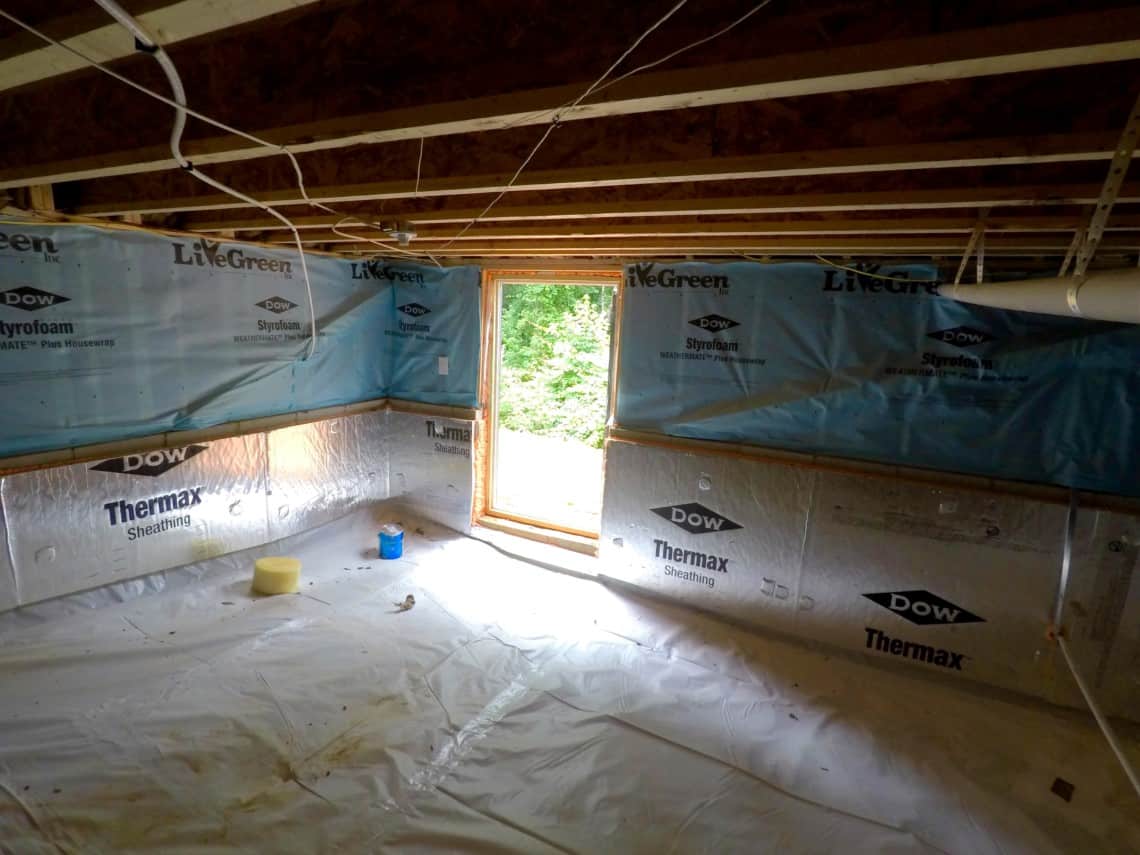
A sealed and conditioned crawl space on a North Carolina home — liner across the floor and up the walls, insulation at the perimeter, vents closed.
The printed reprint
Construction Business Review produced a print reprint of the feature. You can read the whole thing here, or download it to pass on.

Why Crawl Spaces Matter More than Ever — print reprint
Construction Business Review · Insights · By Matt Blaise, Operations Manager, LiveGreen
Download the reprint (PDF)PDF, approximately 220 KB. Opens in a new tab.

Want the same assessment the article describes?
We go under the house, take real moisture readings, photograph what is down there, and tell you what your crawl space actually needs.
Get a Free EstimateOr call us directly at (919) 453-6411 · Monday–Friday 7 AM–5 PM
