
Crawl space work is one of those repairs that arrives without warning. An inspector flags it, or a smell gets bad enough that you finally look, and suddenly there is a four or five figure number in front of you that was not in this year's plan.
This page lays out how North Carolina homeowners actually pay for it in 2026 — what each option suits, what it costs you in practice, and one thing that changed this year that a lot of older articles online still get wrong.
First, the thing that changed in 2026
The federal Energy Efficient Home Improvement Credit — the 25C credit that gave homeowners up to 30% back on insulation and air sealing — no longer exists. It was repealed by the One Big Beautiful Bill Act of 2025 and applied only to qualifying work placed in service on or before December 31, 2025.
A great deal of contractor and home-improvement content still promises that credit, because it was accurate for years and nobody went back to update it. If a company quoting your crawl space tells you that you will get 30% back from the IRS in 2026, they are working from stale information. Check with a tax professional rather than taking anyone's word for it, including ours.
How most people pay for it
Cash, or a contractor payment schedule
The cheapest option is always the one with no interest attached. Most crawl space work in the Triangle falls in a range that a household emergency fund can absorb, particularly at the lower end where the job is a liner and vent sealing rather than a full drainage and encapsulation package.
Many contractors in this trade also structure the work as a deposit at scheduling with the balance on completion, which spreads the outlay across a few weeks without financing costs. Ask us what arrangement we can accommodate on your job — it is a normal question and it costs nothing to ask.
Home equity loan or HELOC
For most homeowners with meaningful equity, this is the lowest-rate way to borrow for a repair of this size. A home equity loan gives you a lump sum at a fixed rate; a HELOC gives you a revolving line you draw on as work progresses, which suits staged projects.
Both are secured against your house, which is what makes the rate competitive and is also the reason to be deliberate about it. Closing can take a few weeks, so this is not the option for water actively coming in.
Unsecured personal loan or credit union loan
Personal loans fund quickly, often within days, and are not secured against the house. Rates are higher than home equity products, sometimes considerably, and they depend heavily on credit profile.
North Carolina has a strong local credit union presence, and credit unions frequently price home-improvement loans better than national lenders for members. If you belong to one, it is worth a call before accepting the first offer you find online.
Rolling the work into a purchase or refinance
If the crawl space was flagged during a home inspection and you have not closed yet, you have more options than you will have afterward. Renovation mortgage products such as an FHA 203(k) or a conventional renovation loan let qualifying repairs be financed as part of the purchase.
The simpler route, and often the faster one, is negotiating a seller credit or a price reduction covering the repair. In this part of the state, crawl space moisture is a familiar enough finding that sellers and agents are used to the conversation. Bring the actual quote to it.
Utility rebates on the insulation portion
Duke Energy's Smart Saver program offers residential rebates on insulation and air sealing improvements in North Carolina. Published attic-insulation tiers run from about $0.25 per square foot up to $600, rising to about $0.31 per square foot up to $800 depending on how little insulation the home starts with, and the program also covers wall and floor insulation and air sealing.
An important limit: these are insulation and air-sealing rebates. The encapsulation itself — the liner, the drainage, the dehumidifier — is generally not an insulation measure and generally does not qualify. If your project includes an insulation component, that portion may. Programs also typically require the work be done by an approved contractor, so confirm current terms and eligibility directly with Duke Energy before assuming a number.
Financing changes when you pay for the work. It does not change what the work costs. Get the scope right first, then decide how to pay for it.
Comparing the options
| Option | Speed | Typical relative cost | Suits |
|---|---|---|---|
| Cash or payment schedule | Immediate | No borrowing cost | Smaller scopes, urgent work |
| Home equity loan | Weeks | Lowest borrowing cost | Larger jobs, owners with equity |
| HELOC | Weeks | Low, usually variable | Staged or phased work |
| Personal loan | Days | Higher | Fast access, limited equity |
| Credit union loan | Days to weeks | Often better than national lenders | Existing members |
| Renovation mortgage | Weeks, at closing | Mortgage rate | Buyers, inspection findings |
| Seller credit | At closing | None to you | Buyers still in negotiation |
| Duke Energy rebate | After completion | Reduces cost | Insulation portion only |
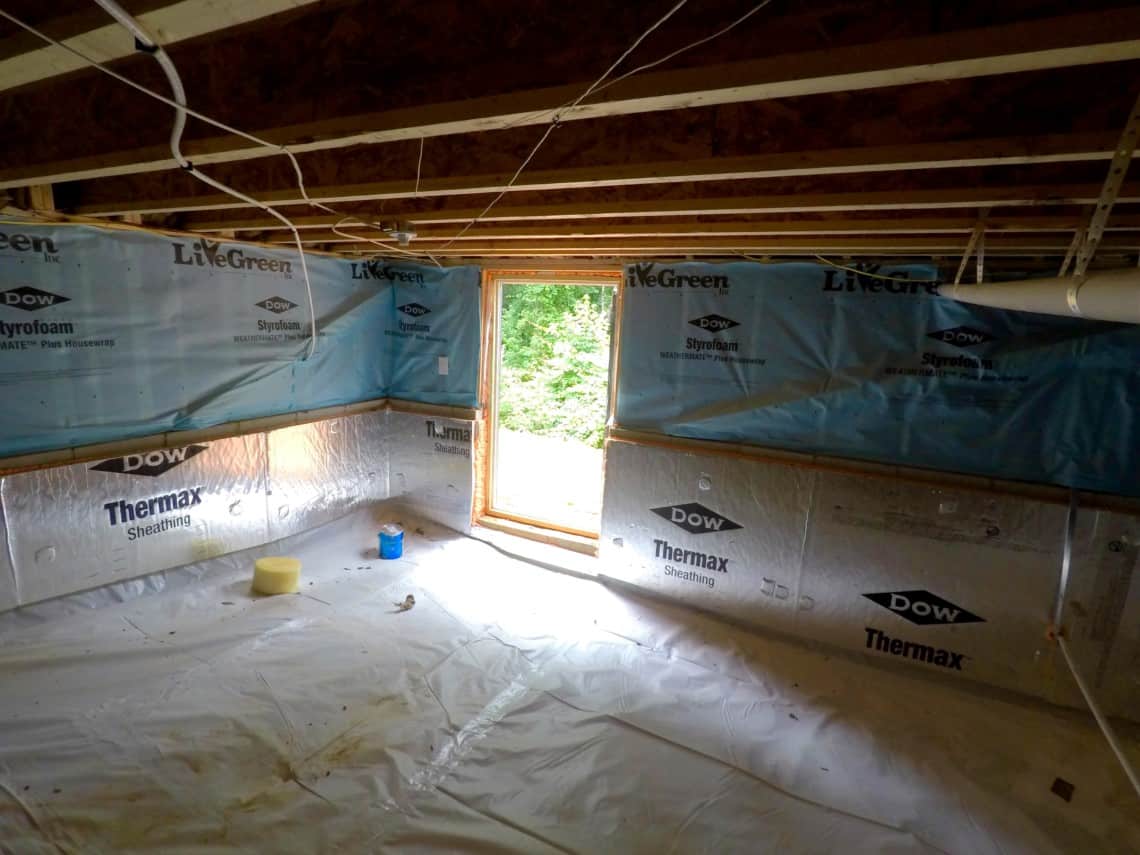
Whatever pays for it, the finished job should look like this: liner across the floor and up the walls, sealed terminations, and insulation where the sealed envelope actually needs it.
How to stage the work if the whole job is out of reach
If the full scope does not fit the budget this year, staging it in a deliberate order is far better than shopping for a cheaper version of the same job. Order matters, because doing these out of sequence means paying twice.
- Water first, always. Grading, gutter and downspout extensions, and drainage where the house needs it. These are also the cheapest items on the list and some are genuinely a weekend of your own work.
- Then the ground cover and vent sealing, which removes the largest continuous moisture source.
- Then remove failed insulation, which is doing nothing useful and is holding moisture against the subfloor.
- Then wall insulation and humidity control once the space is sealed and you can see what it actually holds.
What we would not recommend is cutting the sealed seams, wall terminations or pier wrapping to hit a number. Those are the parts doing the work, and a cheaper quote that omits them is not a discount — it is a different, less effective job. There is more on that in our guide to why quotes differ.
Common questions
Is there still a federal tax credit for crawl space encapsulation in 2026?
No. The Energy Efficient Home Improvement Credit under section 25C, which covered insulation and air sealing, was repealed by the One Big Beautiful Bill Act of 2025 and applied only to qualifying property placed in service on or before December 31, 2025. Content published before that change still describes it as available. Confirm your own situation with a tax professional.
Does Duke Energy pay for crawl space encapsulation?
Not for encapsulation itself. Duke Energy's Smart Saver residential program offers rebates on insulation and air sealing improvements, with published attic tiers running from about $0.25 per square foot up to $600, rising to about $0.31 per square foot up to $800 for homes starting with very little insulation. The liner, drainage and dehumidifier portions of an encapsulation are generally not insulation measures. If your project includes insulation work, that part may qualify, and the program typically requires an approved contractor. Confirm current terms with Duke Energy directly.
What is the cheapest way to borrow for crawl space work?
For most homeowners with equity, a home equity loan or HELOC carries the lowest rate, because it is secured against the house. That security is also the reason to be deliberate about it. Personal and credit union loans fund faster and are unsecured but cost more, and rates depend heavily on credit profile. Local credit unions in North Carolina often price home improvement loans better than national lenders for their members.
My home inspection flagged the crawl space. Can I get the seller to pay?
Often, yes, and it is worth asking before you close because your leverage largely disappears afterward. Crawl space moisture is a familiar finding in this part of the state, so sellers and agents are used to the conversation. Bring an actual contractor quote rather than an estimate, and ask for a seller credit or a price reduction. Qualifying repairs can also sometimes be financed into the purchase through a renovation mortgage product.
Should I finance the whole job or do it in stages?
Either can be sensible, but if you stage it, stage it in the right order. Handle bulk water first, then the ground cover and vent sealing, then removal of failed insulation, then wall insulation and humidity control. What does not work is buying a cheaper version of the full job by cutting sealed seams, wall terminations or pier wrapping, because those are the parts that make a sealed crawl space perform.
Does Live Green offer financing?
Ask us when you get your quote and we will tell you exactly what we can accommodate on your job. What we will not do is quote you payment terms on a web page that may not apply to your situation. The options above are the ones North Carolina homeowners most commonly use, and we are happy to talk through how the work could be staged to fit a budget.
Sources
This page is general information about how homeowners commonly pay for this kind of work. It is not financial, lending or tax advice, and Live Green Inc. is not a lender or a tax adviser. Rates, programs and eligibility change; confirm anything that affects your decision with the lender, the utility, or a tax professional.
Get the number before you plan around it
A real quote makes every one of these conversations easier — with a lender, with a seller, or with your own budget.
Get a Free EstimateOr call us directly at (919) 453-6411 · Monday–Friday 7 AM–5 PM
