

You have cleaned. You have replaced the HVAC filter. You have pulled up a corner of the carpet and found nothing. The smell is still there, worse on humid days, strongest downstairs, and it comes back within an hour of opening the windows.
In a North Carolina home with a crawl space, that smell is coming from under the floor far more often than not. And the reason you cannot find it by cleaning is that the source is not in the room you are standing in. You are smelling the crawl space through the floor.
What you are actually smelling
The musty odor is not dirt, and it is not "old house smell". It is a set of gases given off by mold and bacteria as they digest damp wood and organic material. They are produced continuously while the growth is active, they are detectable at extremely low concentrations, and they move freely through air.
That last point is why the smell arrives upstairs while the growth stays below. You are smelling the crawl space's exhaust, not its contents.
If you can smell your crawl space from the hallway, air is moving from the crawl space into the hallway. The smell is the evidence.
How the smell gets from under the house into your living room
Warm air rises and leaks out of the upper part of a house — through the attic, recessed lights, the top of the walls. That escaping air has to be replaced, and the replacement gets pulled in at the lowest point of the building. In a home over a crawl space, the lowest point is the crawl space.
The result is that a meaningful share of the air in your living space has come up through the floor. It travels through gaps around plumbing and duct penetrations, through the seams in the subfloor, around the rim joist, and directly through any ductwork with leaks in it. This is normal building physics, not a defect in your house — which is exactly why sealing the crawl space works and spraying air freshener does not.
Why August is the worst month for it
Two things peak at once in the Piedmont in late summer.
Outdoor dew point. From June through September, outdoor air in the Triangle routinely carries a dew point in the low 70s. That air comes through foundation vents, meets a floor joist or an air conditioning duct sitting in the low 60s, and condenses on it. The vents that were supposed to dry the space out are actively wetting it.
Soil moisture. Piedmont clay holds water and gives it up slowly. An uncovered dirt crawl space floor evaporates that moisture upward all year, and warm months accelerate it.
Put those together and a vented crawl space in August can sit above 80% relative humidity for weeks. Wood exposed to that long enough reaches a moisture content where mold grows readily. The smell follows a few weeks behind, which is why so many people first notice it in late summer.
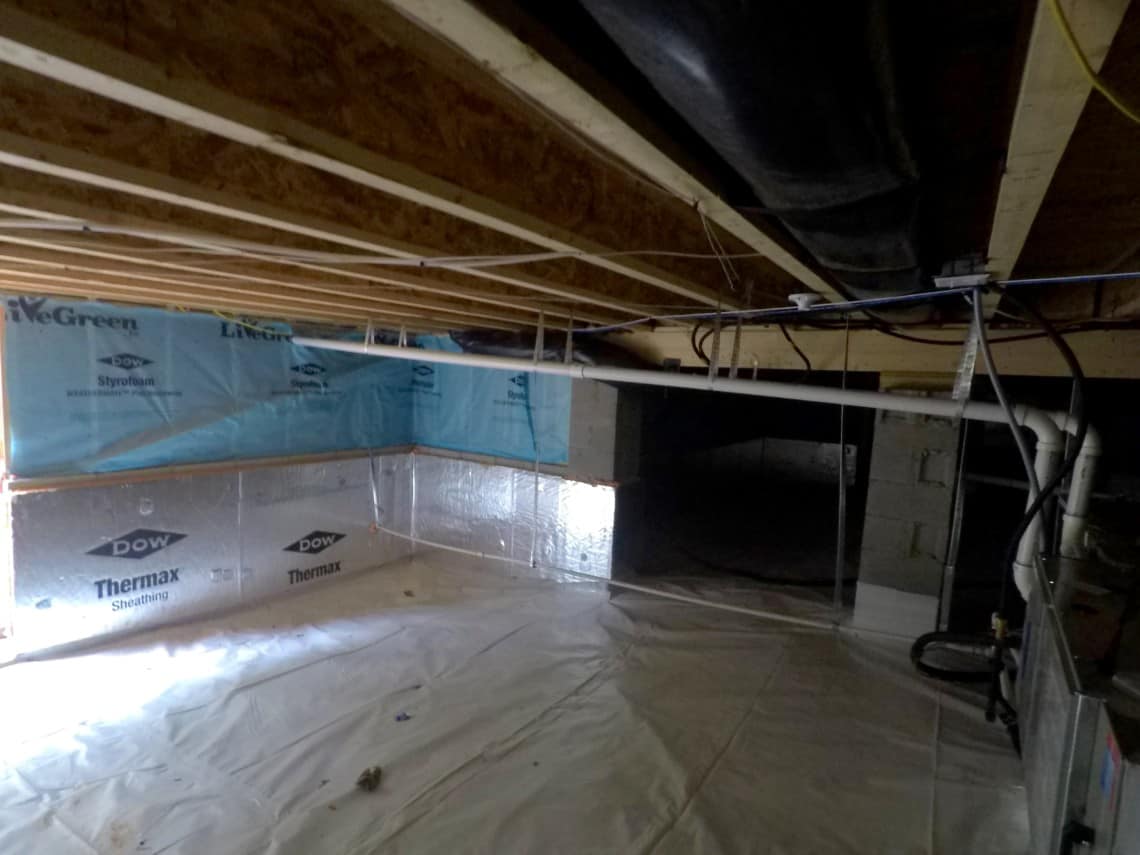
Sealed on the left, untreated on the right. Once the ground is covered and the vents are closed, the crawl space stops behaving like the outdoors and the moisture supply feeding the smell is cut off.
Things people try that do not work
What people try
Air fresheners, candles, plug-ins, an ozone generator, or a bowl of vinegar.
Why it does not hold
These mask or temporarily oxidize the odor. The source keeps producing it, so the smell returns as soon as the product stops. Ozone generators also carry their own health warnings and are not a remedy for mold.
What people try
Running a dehumidifier in the hallway or living room.
Why it does not hold
It treats the symptom one floor above the cause, while the crawl space keeps supplying fresh moisture and fresh odor. It also does nothing to stop the wood below from continuing to decay.
What people try
Opening the crawl space vents wider to "air it out".
Why it does not hold
In a humid Southern summer this makes it worse. You are introducing more moisture-laden air to condense on cool surfaces. Vented crawl spaces are a building convention inherited from drier climates.
What people try
Spraying bleach on the visible growth.
Why it does not hold
It may lighten surface staining without addressing growth that has penetrated porous wood, and it adds water to a space that already has too much. Remediation without fixing the moisture source means doing it again next year.
How to confirm it is the crawl space
- Open the crawl space hatch and smell it. The most direct test there is. If the hatch smells like the hallway does, only stronger, you have your answer.
- Note whether the smell tracks humidity rather than anything you do indoors. Worse on muggy days and after rain points downward.
- Check whether it is strongest on the lowest floor and near floor registers and the bottom of stairwells.
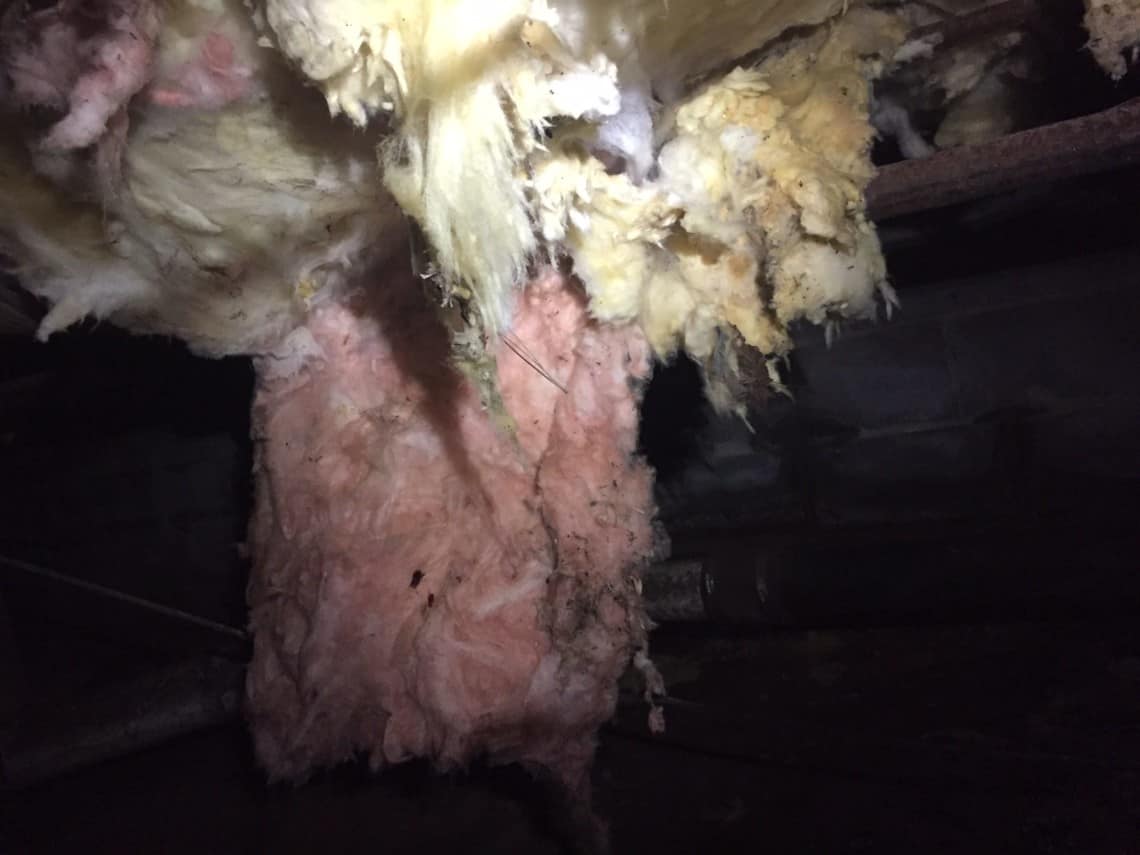
- Look for dark staining on the joists and subfloor from the hatch with a flashlight, and for insulation that is sagging, dark or on the ground.
- Leave a cheap hygrometer in the crawl space for a few days. Readings in the 70s and 80s in summer are the conditions mold needs.
- Check for standing water or a tide line on the piers, which points to a drainage problem on top of the humidity one.
A note about health
We are a contractor, not a medical practice, and we will not tell you what a smell in your house is doing to your health. What is widely established is that damp indoor environments and mold exposure can aggravate asthma and allergies, and that some people are considerably more sensitive than others. If someone in the house has breathing symptoms that improve when they are away from home, that is worth raising with a doctor as well as with us.
What actually fixes it
The odor stops when the conditions producing it stop. In practice that means treating the crawl space as part of the house rather than as outdoors:
- Deal with any bulk water first — grading, downspouts, and drainage where the house needs it. Nothing else works over standing water.
- Seal the ground with a heavy liner carried up the walls, with sealed seams and terminations, so soil moisture stops evaporating into the space.
- Close and seal the vents so humid summer air is no longer being drawn in.
- Remove insulation that is already wet or fallen, and insulate at the perimeter walls and rim joist instead.
- Manage what humidity remains with conditioned air or a correctly sized dehumidifier, chosen for the house rather than by default.
- Remediate existing growth where it is significant — but after, or alongside, the moisture fix, never instead of it.
Most homeowners notice the difference within a couple of weeks. The wood has to dry and the residual odor has to clear, so it is not instant, but the smell stops being replenished the day the space is sealed.
Common questions
Why does my house smell musty only in summer?
Because the moisture supply is seasonal. From June through September, outdoor air in the Triangle carries a dew point in the low 70s, and that air condenses on the cooler wood and ductwork inside a vented crawl space. Combined with moisture evaporating from a bare soil floor, the crawl space can sit above 80% relative humidity for weeks. Mold becomes active, and the odor follows.
Can a musty crawl space smell make you sick?
We are a contractor rather than a medical practice, so we will not diagnose anything. What is widely established is that damp indoor environments and mold exposure can aggravate asthma and allergy symptoms, and that sensitivity varies a lot between people. If someone in the house has symptoms that ease when they are away from home, that is worth raising with a doctor as well as addressing the moisture.
Will a dehumidifier in the crawl space get rid of the smell?
Not on its own, if the space is still vented and the ground is still bare. A dehumidifier in an unsealed crawl space is trying to dry outdoor air as fast as it arrives, which it cannot do. It will run almost constantly and cost real money to operate. Seal the ground and close the vents first, then decide whether a dehumidifier is needed at all.
How long until the smell goes away after encapsulation?
Most homeowners notice a clear difference within a couple of weeks. The moisture supply stops on the day the space is sealed, but the wood still has to dry and residual odor has to clear from soft furnishings and the air in the house. If the smell has not improved after a month, something is still supplying moisture and it is worth going back under to find out what.
Do I need mold remediation as well as encapsulation?
Sometimes. Light surface growth on framing often does not need separate remediation once the space is dried out, because the growth becomes inactive when the moisture goes. Heavy or widespread growth is usually worth remediating properly. What never works is remediation on its own, because the conditions that grew it are still there and it returns in the same season.
Could the smell be something other than the crawl space?
Yes, and it is worth ruling the others out. A slow plumbing leak under a bathroom, a dry drain trap in a room that is rarely used, a failed water heater pan, or wet insulation in the attic can all produce a similar odor. The distinguishing feature of a crawl space smell is that it is strongest on the lowest floor, tracks outdoor humidity, and is unmistakable when you open the hatch.
Find out what is under your floor
We will go under the house, take moisture and humidity readings, photograph what we find, and tell you whether the crawl space is the source.
Get a Free EstimateOr call us directly at (919) 453-6411 · Monday–Friday 7 AM–5 PM
