

Most crawl space problems announce themselves upstairs first. A smell in the hallway. Floors that never warm up. A humidity reading that will not come down no matter what the thermostat says. The crawl space is the last place anyone looks, and it is usually where the answer is.
This guide works backward from the symptom you have actually noticed to the cause underneath it. We have been opening crawl spaces across the Triangle since 2003, and the same handful of causes account for nearly everything homeowners call us about.
One thing worth saying up front, because it saves people money: not every symptom on this page means you need a full encapsulation. Some of these have cheaper, more targeted fixes, and a contractor who sells you the biggest solution for every symptom is not diagnosing, they are selling.
In North Carolina, the crawl space is not a dry basement that happens to be short. It is a dirt-floored, vented cavity connected to the air you breathe upstairs.
Why North Carolina crawl spaces fail so predictably
Two things make the Piedmont unusually hard on crawl spaces. The first is summer dew point. From roughly June through September, outdoor air in the Triangle regularly carries a dew point in the low 70s. When that air moves through a foundation vent and touches a floor joist or a duct sitting at 62 degrees, it condenses. The vents that were supposed to dry the space out are the reason it is wet.
The second is soil. Piedmont clay holds water and drains slowly, so a crawl space with an uncovered dirt floor is evaporating groundwater into itself all year. A bare crawl space floor can release gallons of water vapor a day, and it has nowhere to go but up into the house.
Add the stack effect — warm air rising and leaving through the roof, pulling replacement air up from the lowest point in the house — and a meaningful share of the air you are breathing in your living room started in the crawl space.
Find your symptom
A musty or earthy smell in the house
Usual cause Microbial growth on the wood in the crawl space, carried upstairs by the stack effect. What you are smelling is not dirt; it is the gases that mold and bacteria give off as they digest damp wood.
Usually not The carpet, the HVAC filter, or anything you can fix with an air freshener. If the smell is worse on humid days and strongest near floor vents or on the lowest floor, it is coming from below.
Visible mold on joists, subfloor or insulation
Usual cause Sustained relative humidity above roughly 70% in the crawl space. Wood does not need liquid water to grow mold; it needs the surrounding air to stay damp long enough for the wood's own moisture content to climb.
Usually not A plumbing leak, unless the growth is concentrated in one spot under a bathroom or kitchen. Widespread, even growth across a whole crawl space is a humidity problem, not a leak.
Important: remediation without fixing the moisture source is money spent twice. Killing the growth does nothing about the conditions that created it, and it will return in the same season.
Standing water or mud after heavy rain
Usual cause Bulk water intrusion — grading that slopes toward the house, downspouts discharging at the foundation, a high water table, or a missing or failed drainage system.
Usually not Something a vapor barrier alone will fix. A liner laid over standing water traps it. Bulk water is a drainage problem and has to be solved first, with grading, gutter extensions, a French drain or a sump, before encapsulation makes any sense.
Cold floors over the crawl space in winter
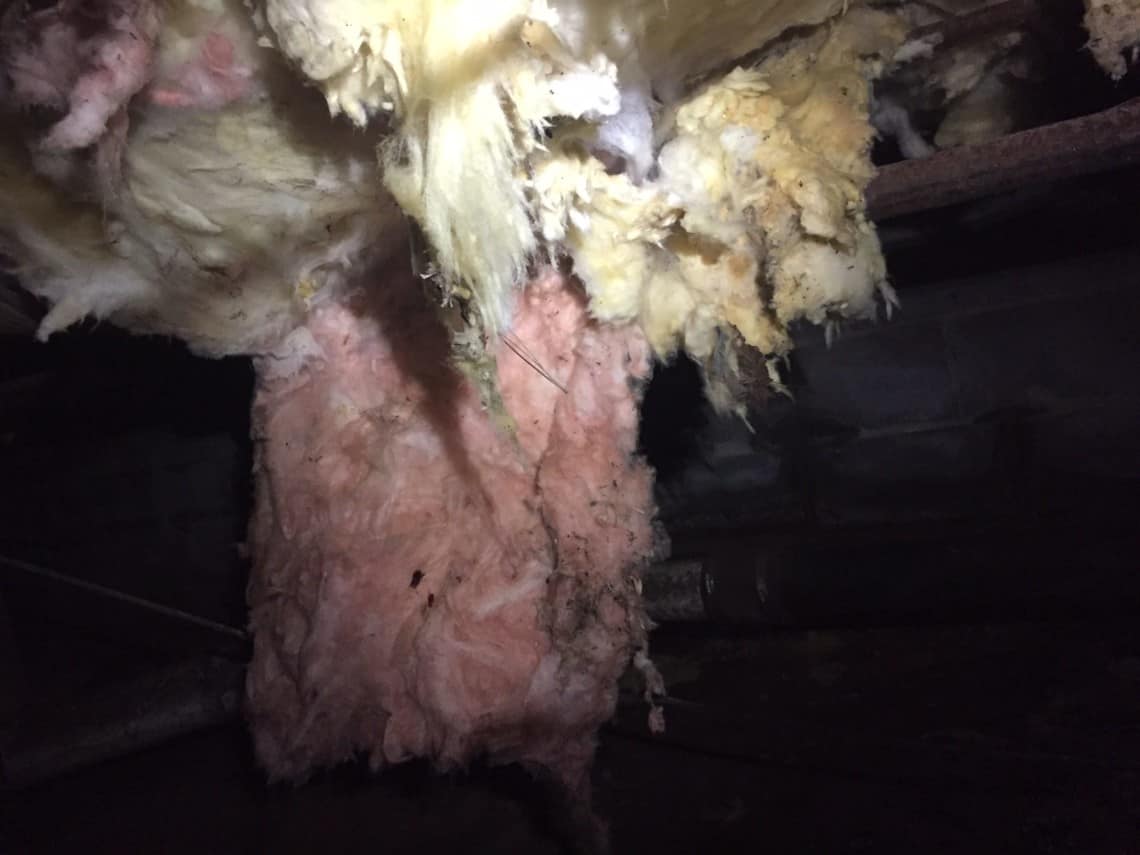
Usual cause Missing, fallen or waterlogged floor insulation, combined with open vents letting winter air circulate directly under the subfloor. Wet fiberglass loses most of its R-value and eventually falls out of the joist bays entirely, which is what the photo at the top of this page shows.
Usually not An undersized furnace. If one room over the crawl space is cold and the rooms over the garage or a slab are fine, the problem is under the floor, not in the equipment.
Indoor humidity you cannot get down
Usual cause A crawl space evaporating soil moisture into the house all summer. If your indoor relative humidity sits in the high 50s or 60s while the AC runs constantly, the system is fighting a moisture source it was never sized for.
Usually not Solved by a bigger air conditioner. Oversizing makes it worse: the unit satisfies the thermostat faster, runs shorter cycles, and removes less moisture per hour than a correctly sized one.
Sagging, bouncy or soft floors
Usual cause Long-term moisture in the framing — wood that has stayed above roughly 20% moisture content for years loses strength, and fungal decay follows. Failed or settled support piers are the other common cause.
Usually not Cosmetic. This is the one symptom on the list that can become a structural repair if it is left alone, and it is worth getting eyes on sooner rather than later.
A radon test that came back high
Usual cause Soil gas entering through the dirt floor and foundation penetrations. Radon comes from uranium decaying in rock and soil, and parts of North Carolina — including pockets of the Triangle — sit on geology that produces more of it.
Usually not Fixed by encapsulation on its own. A sealed liner reduces the pathway, but a confirmed high reading needs an actual mitigation system that depressurizes under the liner and vents the gas above the roofline. The two jobs work well together and are often done at the same time, but one does not replace the other.
Pests — mice, snakes, roaches or termites
Usual cause An open, damp, dark space with easy access. Damp wood in particular is what draws termites; they need moisture as much as they need cellulose.
Usually not A reason to skip pest control. Sealing and drying the crawl space removes the conditions pests are looking for, but an active infestation still needs treating by someone licensed to do it.
A home inspector flagged the crawl space
Usual cause Inspectors are trained to note moisture readings, fallen insulation, staining on joists, standing water and absent or torn vapor barriers. On a Triangle home built before the mid-2000s, at least one of those is close to routine.
Usually not A deal-breaker, and not automatically a full encapsulation either. Get the actual moisture readings and photographs, then price the specific defect. "Inspector said encapsulate" is a starting point for a conversation, not a diagnosis.
What actually fixes it
Across every symptom above, the durable fixes come down to the same short list, applied in the right order. Order matters more than most people expect — doing step three before step one is the single most common way to waste money on a crawl space.
- Control bulk water first. Grading, gutters, downspout extensions, and drainage or a sump where the water table demands it. Nothing else works until liquid water is handled.
- Seal the ground. A heavy liner across the floor and up the walls, with sealed seams and terminations, stops soil moisture evaporating into the space.
- Close and seal the vents, so humid summer air is no longer being invited in as a supposed drying strategy.
- Insulate at the right plane. In a sealed crawl space that usually means the perimeter walls and rim joist rather than fiberglass batts between the floor joists.
- Manage the remaining humidity with conditioned air from the house or a properly sized dehumidifier, depending on the house. This is a design decision, not a default.
- Mitigate radon separately if a test confirms an elevated level.
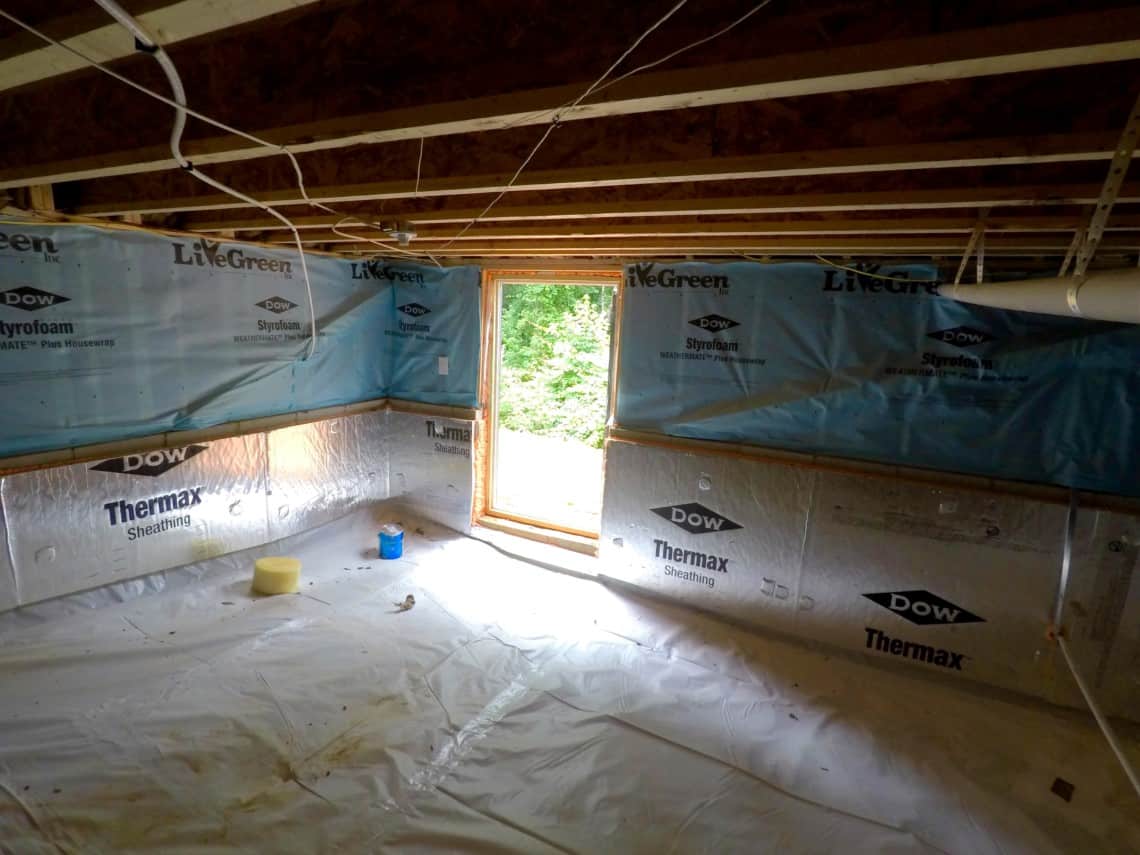
The same kind of space after encapsulation — sealed liner across the floor, rigid board on the perimeter walls, and the rim joist closed off. Dry, light, and no longer feeding humidity into the house above.
A note on dehumidifiers
A dehumidifier in a crawl space that has not been sealed is a machine trying to dry out the entire state of North Carolina, one vent at a time. It will run more or less constantly, cost real money to operate, and never win. Seal first. Then decide whether a dehumidifier is actually needed — in a properly sealed and insulated crawl space, often it is not.
How to check your own crawl space without going in
You do not need to crawl through it to learn a lot. From the access hatch, with a flashlight and without climbing in:
- Is there a liner on the ground, and does it cover everything, or is bare dirt showing at the edges?
- Is the insulation between the joists in place, or is it hanging down, dark, or on the floor?
- Does the wood look uniformly dry and pale, or are there dark patches and staining on the joists and subfloor?
- Is there standing water, mud, or a tide line on the piers?
- Does the air smell earthy or sour when you open the hatch?
- Are the foundation vents open, and is any ductwork down there sweating or torn?
A cheap hygrometer left in the crawl space for a few days tells you more than any of the above. In a Triangle summer, a healthy sealed crawl space holds somewhere in the region of 50–60% relative humidity. Readings in the 70s and 80s are the conditions mold needs.
When to call someone
Call if you have standing water, visible growth across the framing, floors that flex underfoot, a radon result above the EPA action level, or a smell that has been getting worse rather than better. Those are not wait-and-see items.
If you are simply not sure — the space looks damp but nothing dramatic is happening — an assessment with actual moisture readings is worth more than a guess. It also gives you the numbers to compare quotes against, which matters, because encapsulation quotes on the same house routinely differ by thousands of dollars.
Common questions
How do I know if my crawl space is causing my indoor air problem?
The clearest tell is that the symptom tracks with outdoor humidity rather than with anything you are doing indoors. A smell that gets stronger on muggy days, indoor humidity that climbs in summer no matter how the air conditioner runs, and air that smells worse on the lowest floor all point downward. Because warm air rising through the house pulls replacement air up from the lowest point, a meaningful share of the air you breathe upstairs started in the crawl space.
Does every crawl space in North Carolina need to be encapsulated?
No. A crawl space that stays dry, has an intact ground cover, sound insulation and no history of standing water may not need anything. Encapsulation earns its cost where there is a real moisture problem, which in the Piedmont is common but not universal. Get moisture readings before you buy a solution, and be skeptical of anyone who recommends the same job for every house.
Will encapsulation fix a radon problem?
It helps but it is not a substitute for mitigation. A sealed liner reduces the pathway soil gas uses to enter, and some homes do see readings fall. A confirmed elevated result still calls for a mitigation system that actively depressurizes beneath the liner and vents the gas above the roofline. The two are frequently installed together, and doing them at the same time is cheaper than doing them a year apart.
Can I just put down plastic myself?
A ground cover is better than bare dirt, and if that is what the budget allows it is not a wasted afternoon. It is not encapsulation, though. The performance comes from the details: a heavy liner rather than painter's plastic, seams sealed rather than overlapped, the liner carried up and attached to the walls, penetrations and piers wrapped, and the vents closed. A loose sheet on the floor leaves most of the moisture path open.
Should I remove the fiberglass insulation between my floor joists?
If it is wet, falling, or moldy, yes. Waterlogged fiberglass has lost most of its insulating value and is holding moisture against the subfloor, which is worse than having nothing there. In a sealed crawl space the insulation generally moves to the perimeter walls and rim joist instead, because the space becomes part of the conditioned envelope rather than the outdoors.
How long does a crawl space assessment take?
Usually under an hour for a typical home. It should include moisture readings on the framing, a relative humidity measurement in the space, photographs of what is actually down there, and a look at grading and downspouts outside. If nobody takes readings or photographs, you have received an opinion rather than an assessment.
Not sure what your crawl space is telling you?
We will go under the house, take real readings, photograph what we find, and tell you which of these you actually have.
Get a Free EstimateOr call us directly at (919) 453-6411 · Monday–Friday 7 AM–5 PM
